

Introduction
Hello! It’s your Korean language booster, Daily Hangul (DailyHangul.com)! 👋
Have you ever watched a K-drama where the main character gets a mysterious text message asking for money? 😱 In shows like Taxi Driver or The Glory, characters often deal with bad guys trying to trick them. Unfortunately, this happens in real life too!
Today, we are going to learn essential expressions to protect your hard-earned money while living or traveling in Korea. Knowing these words will not only keep your wallet safe but also help you understand crime thrillers without subtitles! Let’s become ‘Smart K-Learners’ together! 👮♂️✨
Key Expressions
Here are 4 key expressions to help you spot and stop financial scams!
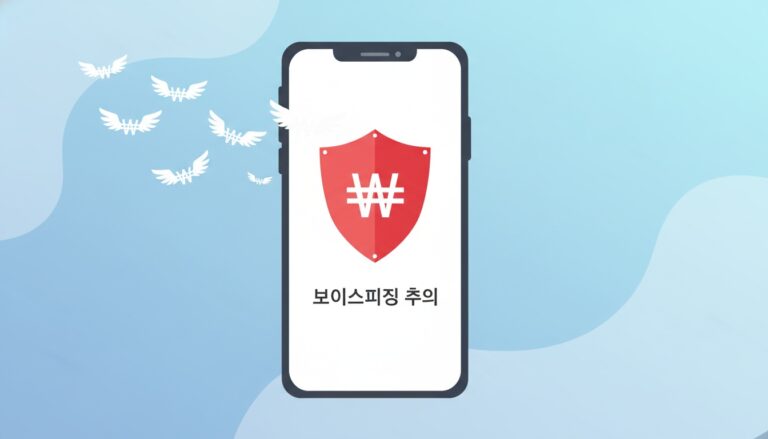
1. 보이스 피싱 (Voice Phishing)
- Pronunciation: [Boiseu pising]
- English Meaning: Voice Phishing (Phone scam)
- Explanation: This is a combination of the English words “Voice” and “Phishing.” It refers to scams done over the phone or via text messages. If you hear this word on the news or in a drama, someone is trying to steal money!
- 💡 Pronunciation Tip: This is a Konglish (Korean + English) word! It sounds almost exactly like the English pronunciation, but with a Korean accent. Make sure to pronounce the ‘eu’ in Boiseu softly.
2. 사기 (Fraud / Scam)
- Pronunciation: [Sagi]
- English Meaning: Fraud, Scam
- Explanation: This is the general word for any kind of trickery to steal something. You will often hear “사기다!” (It’s a scam!) or “사기꾼” (Scammer) in movies.
- 💡 Pronunciation Tip: The ‘g’ in Sagi is soft, somewhat between a ‘g’ and a ‘k’. It’s short and crisp!
3. 의심하다 (To suspect / To doubt)
- Pronunciation: [Uisimhada]
- English Meaning: To suspect, To doubt
- Explanation: When an offer sounds too good to be true (like “You won 1 million won!”), you must doubt it. This verb is crucial for staying safe.
- 💡 Pronunciation Tip: The ‘ui’ (의) sound can be tricky. Try to say ‘u’ and ‘i’ very quickly together. Also, in fast speech, the ‘h’ in hada often becomes very weak.
4. 신고하다 (To report)
- Pronunciation: [Singohada]
- English Meaning: To report (to police)
- Explanation: If you spot a scam, you need to report it to the police (112). This is the action verb used for reporting crimes or emergencies.
- 💡 Pronunciation Tip: The ‘n’ (ㄴ) and ‘g’ (ㄱ) are distinct. Make sure to pronounce Sin-go, not Sing-o.
Real Conversation
Let’s see how these words work in a real situation. Minji received a strange text message.
Minji: 이거 봐. 모르는 번호로 문자가 왔어.
(Igeo bwa. Moreuneun beonhoro munjaga wasseo.)
Look at this. I got a text from an unknown number.
Jason: 뭐라고 써 있어?
(Mworago sseo isseo?)
What does it say?
Minji: 내 돈이 위험하대. 링크를 누르라고 해.
(Nae doni wiheomhadae. Ringkeureul nureurago hae.)
It says my money is in danger. It tells me to click the link.
Jason: 잠깐! 그거 보이스 피싱 아니야?
(Jamkkan! Geugeo boiseu pising aniya?)
Wait! Isn’t that voice phishing?
Minji: 정말? 사기 같아?
(Jeongmal? Sagi gata?)
Really? Does it look like a scam?
Jason: 응, 절대 누르지 마. 경찰에 신고하자.
(Eung, jeoldae nureuji ma. Gyeongchare singohaja.)
Yeah, never click it. Let’s report it to the police.
Culture Tip: The “Prosecutor” Call 🏛️
In Korea, a very common type of voice phishing involves someone pretending to be a prosecutor (검사, geomsa) or a police officer. They might say, “Your bank account was used in a crime! Transfer your money to us for safety.”
Remember: Real Korean police, prosecutors, or banks will NEVER ask you to transfer money or ask for your password over the phone. If you get a call like this, just hang up! It’s 100% a sagi (scam)! 🙅♀️
Wrap-up & Quiz
Today we learned how to identify and react to financial scams in Korean. Stay suspicious (uisimhada) of strange messages and keep your money safe!
📝 Pop Quiz!
- What is the Korean word for “Voice Phishing”?
( Hint: B_ _ _ _ P_ _ _ _ _ ) - If you see a scam, you should do this to the police. (To report)
( Hint: S_ _ _ _ _ _ _ _ ) - True or False: It is safe to click links from unknown numbers if they say they are the police.
( Answer: T / F )
Answers:
1. 보이스 피싱 (Boiseu pising)
2. 신고하다 (Singohada)
3. False (It is likely a Sagi!)
See you next time! Stay safe! 👋
Frequently Asked Questions (FAQ)
Q: What does "보이스 피싱 (Voice Phishing)" mean in Korean and how do you pronounce it?
A: In Korean, "보이스 피싱 (Voice Phishing)" is pronounced [Boiseu pising] and means: Voice Phishing (Phone scam)
Q: What does "사기 (Fraud / Scam)" mean in Korean and how do you pronounce it?
A: In Korean, "사기 (Fraud / Scam)" is pronounced [Sagi] and means: Fraud, Scam
Q: What does "의심하다 (To suspect / To doubt)" mean in Korean and how do you pronounce it?
A: In Korean, "의심하다 (To suspect / To doubt)" is pronounced [Uisimhada] and means: To suspect, To doubt
Q: What does "신고하다 (To report)" mean in Korean and how do you pronounce it?
A: In Korean, "신고하다 (To report)" is pronounced [Singohada] and means: To report (to police)







