

Introduction
안녕하세요! Hello! It’s your Korean fluency booster, Daily Hangul! 😊
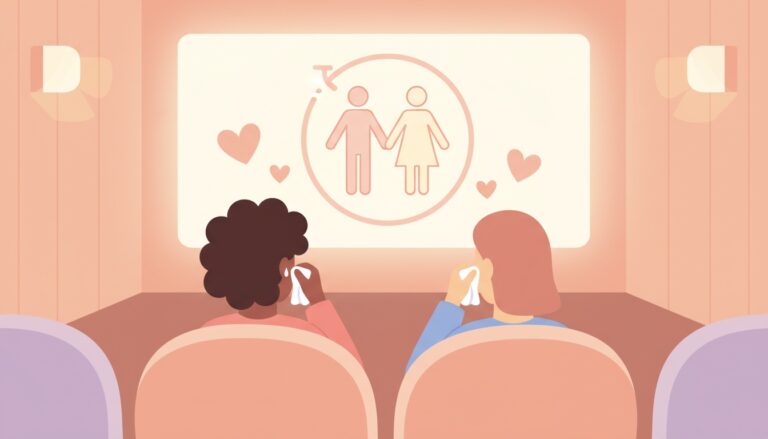
Have you watched the popular K-drama Extraordinary Attorney Woo (이상한 변호사 우영우) or the movie Inseparable Bros (나의 특별한 형제)? These touching stories help us understand the lives of people with disabilities and the prejudices they face.
Today, we are going to learn how to discuss these kinds of meaningful movies. Being able to express your feelings about social issues is a huge step up in your Korean journey! Let’s learn how to share empathy and support in Korean. Ready? Let’s go! 🎬✨
Key Expressions
Here are 4 key expressions to help you talk about touching movies and social equality.
1. 감동적이었어요
- Pronunciation: [Gam-dong-jeog-i-eo-sseo-yo]
- English: It was touching / It was moving.
- Detail: You use this when a movie or story touches your heart. ‘감동’ means ‘emotion’ or ‘impression.’ If you want to say “I was moved,” you can say “감동받았어요 (Gam-dong-ba-da-sseo-yo).”
- 💡 Pronunciation Tip: The ‘jeog-i’ part links together like [jeo-gi]. So it sounds smoother: Gam-dong-jeo-gi-eo-sseo-yo.
2. 편견
- Pronunciation: [Pyeon-gyeon]
- English: Prejudice / Bias.
- Detail: This is a slightly serious word but very useful. In dramas, you might hear “편견을 버려요” (Throw away your prejudice). It refers to judging someone before knowing them, especially regarding disabilities.
- 💡 Pronunciation Tip: Make sure to pronounce the ‘yeo’ (ㅕ) sound clearly in ‘Pyeon’ and ‘gyeon’. It’s not ‘Pun-gun’! Open your mouth wider.
3. 차별하지 마세요
- Pronunciation: [Cha-byeol-ha-ji ma-se-yo]
- English: Please don’t discriminate.
- Detail: ‘차별’ means discrimination. Adding ‘-하지 마세요’ means ‘Please don’t do it.’ You can use this to defend someone or express that something is unfair in a movie.
4. 우리는 모두 똑같아요
- Pronunciation: [U-ri-neun mo-du ttok-ga-ta-yo]
- English: We are all the same.
- Detail: This is a beautiful phrase to express equality. It means that regardless of disability or background, we are all human beings.
- 💡 Pronunciation Tip: ‘똑 (Ttok)’ has a tense double consonant sound. Say it strongly and shortly! Also, ‘같아요 (ga-ta-yo)’ sounds like [ga-ta-yo] because the ‘t’ sound moves to the next vowel.
Real Conversation
Let’s see how friends talk after watching a movie about a disabled character.
Minji: 어제 그 영화 봤어? 어땠어?
(Did you see that movie yesterday? How was it?)
[Eo-je geu yeong-hwa bwa-sseo? Eo-ttae-sseo?]
Alex: 응, 진짜 감동적이었어요. 많이 울었어요.
(Yes, it was really touching. I cried a lot.)
[Eung, jin-jja gam-dong-jeog-i-eo-sseo-yo. Ma-ni u-reo-sseo-yo.]
Minji: 주인공이 힘들었을 것 같아. 사람들의 편견 때문에.
(I think the main character had a hard time. Because of people’s prejudice.)
[Ju-in-gong-i him-deu-reo-sseul geot ga-ta. Sa-ram-deu-rui pyeon-gyeon ttae-mu-ne.]
Alex: 맞아요. 장애가 있어도 우리는 모두 똑같아요.
(That’s right. Even if they have a disability, we are all the same.)
[Ma-ja-yo. Jang-ae-ga i-sseo-do u-ri-neun mo-du ttok-ga-ta-yo.]
Culture Tip 🇰🇷
“Barrier-Free” (배리어 프리) in Korea
Recently, the term “Barrier-Free” has become very popular in Korea! It refers to making society accessible for everyone, including people with disabilities, seniors, and pregnant women. You might see “Barrier-Free Movies” (films with subtitles for the hearing impaired and audio descriptions for the visually impaired) at film festivals like the Busan International Film Festival. Using the word “배리어 프리” will make you sound very socially aware in Korea! 👍
Wrap-up & Quiz
Today we learned how to express empathy and talk about equality. These words are powerful because they show your warm heart! ❤️
Let’s practice! (True or False)
- “감동적이었어요” means “It was boring.” ( O / X )
- “편견” means “Prejudice.” ( O / X )
- If you want to say “We are all the same,” you say “우리는 모두 똑같아요.” ( O / X )
Answers:
1. X (It means “It was touching”)
2. O
3. O
See you next time! 안녕! 👋
Frequently Asked Questions (FAQ)
Q: What does "감동적이었어요" mean in Korean and how do you pronounce it?
A: In Korean, "감동적이었어요" is pronounced [Gam-dong-jeog-i-eo-sseo-yo] and means: a key conversational Korean expression covered in this lesson.
Q: What does "편견" mean in Korean and how do you pronounce it?
A: In Korean, "편견" is pronounced [Pyeon-gyeon] and means: a key conversational Korean expression covered in this lesson.
Q: What does "차별하지 마세요" mean in Korean and how do you pronounce it?
A: In Korean, "차별하지 마세요" is pronounced [Cha-byeol-ha-ji ma-se-yo] and means: a key conversational Korean expression covered in this lesson.
Q: What does "우리는 모두 똑같아요" mean in Korean and how do you pronounce it?
A: In Korean, "우리는 모두 똑같아요" is pronounced [U-ri-neun mo-du ttok-ga-ta-yo] and means: a key conversational Korean expression covered in this lesson.







