

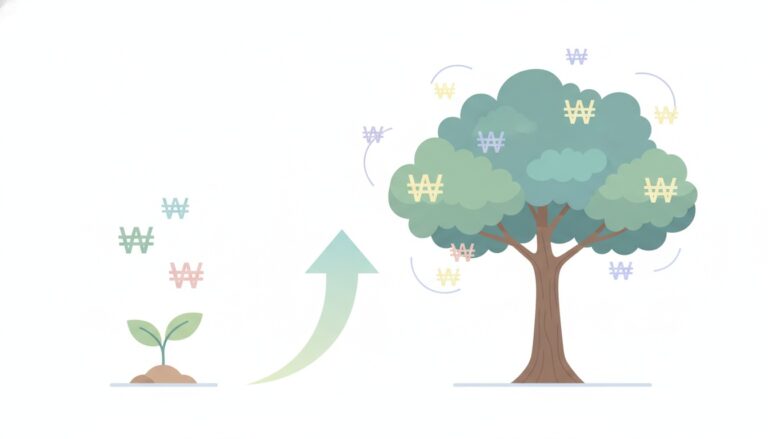
🚀 K-Startup 101: Early vs. Late Stage Investment Talk!
👋 Introduction
안녕하세요! (Annyeonghaseyo!) Hello! This is your Korean proficiency booster, Daily Hangul (DailyHangul.com)! 🌟
Do you love the K-Drama “Start-Up” (스타트업)? Watching Nam Do-san and Han Ji-pyeong talk about business might have made you curious about professional Korean terms! 🏢✨
Today, we are diving into the world of Venture Capital. Specifically, we will learn how to discuss the differences between Early-stage and Late-stage investments. Whether you are dreaming of working in Korea or just want to understand your favorite CEO character’s dialogue without subtitles, this lesson is for you! Let’s level up! 📈
📚 Key Expressions
Here are 4 essential expressions to sound like a pro investor!
1. 초기 단계 vs. 후기 단계
- Pronunciation: [Chogi dangye] vs. [Hugi dangye]
- English Meaning: Early Stage vs. Late Stage
- Detail:
- 초기 (Chogi) means “early period” and 후기 (Hugi) means “late period.”
- 단계 (Dangye) means “stage” or “step.”
- Just like in the drama Start-Up, early-stage companies often work in a “Sandbox” environment!
- 💡 Pronunciation Tip: In 단계 (Dangye), the ‘G’ in ‘ye’ is soft. Try to say “Dan-gye” smoothly without a hard break.
2. 투자하다
- Pronunciation: [Tujahada]
- English Meaning: To invest
- Detail: This is the most common verb used in business news. You can say “Start-up-e tujahada” (Invest in a startup).
- 💡 Pronunciation Tip: The ‘h’ in ‘hada’ is often weak in fast speech. It sounds almost like [Tu-ja-a-da].
3. 위험이 크다
- Pronunciation: [Wiheomi keuda]
- English Meaning: The risk is high (literally: The risk is big)
- Detail: In Korean, we describe risk (위험) as being “big” (크다) rather than “high.”
- Early-stage = 위험이 커요 (Risk is high).
- 💡 Pronunciation Tip: 위험 (Wiheom) connects with the particle 이 (i). So it sounds like [Wi-heo-mi].
4. 안정적이다
- Pronunciation: [Anjeongjeogida]
- English Meaning: To be stable
- Detail: Investors look for this in Late-stage companies. It means the business model is proven and safe.
- 💡 Pronunciation Tip: This is a bit long! Break it down: [An-jeong-jeok-i-da]. The ‘k’ sound at the bottom of 적 (jeok) moves to the next vowel, sounding like [An-jeong-jeo-gi-da].
💬 Real-life Dialogue
Let’s see how a VC Investor (A) and a Junior Analyst (B) might discuss a company.
A: 이 스타트업은 초기 단계인가요?
(Is this startup in the early stage?)
* [I seutateueobeun chogi dangyeyeyo?]
B: 네, 맞아요. 그래서 위험이 커요.
(Yes, that’s right. So the risk is high.)
* [Ne, majayo. Geuraeseo wiheomi keoyo.]
A: 그럼 후기 단계 회사는 어때요?
(Then, how about the late-stage company?)
* [Geureom hugi dangye hoesaneun eottaeyo?]
B: 그곳은 수익이 안정적이에요.
(That place has stable profits.)
* [Geugoseun suigi anjeongjeogieyo.]
A: 좋아요, 어디에 투자할까요?
(Good, where shall we invest?)
* [Joayo, eodie tujahalkkayo?]
🇰🇷 Culture Tip: “Series A, B, C”
Did you know that Korean investors often use English terms too? 😲
Even though we have Korean words like 초기 (Early) and 후기 (Late), in the actual VC scene in Gangnam or Pangyo (Korea’s Silicon Valley), you will hear people say “Series A” (시리즈 A) or “Pre-IPO” directly!
Also, networking events are crucial. In Korea, business relationships often deepen during 회식 (Hoesik), which is a dinner and drinking gathering after work. If you visit a Korean partner, knowing these terms will impress them during the meeting, but bonding happens at the dinner! 🍖🍻
📝 Wrap-up & Quiz
Today we learned how to compare startups! Remember: Early stage (Chogi) has high risk, and Late stage (Hugi) is stable.
Let’s test your knowledge! (Answers are at the bottom)
- “To invest” in Korean is [ ].
- In Korean, we say “Risk is big” (위험이 크다), not “high”. (O / X)
- [ ] means “Late stage”.
Great job today! See you next time! 안녕! 👋
Answers:
1. 투자하다 (Tujahada)
2. O
3. 후기 단계 (Hugi dangye)
Frequently Asked Questions (FAQ)
Q: What does "초기 단계 vs. 후기 단계" mean in Korean and how do you pronounce it?
A: In Korean, "초기 단계 vs. 후기 단계" is pronounced [Chogi dangye] and means: Early Stage vs. Late Stage
Q: What does "투자하다" mean in Korean and how do you pronounce it?
A: In Korean, "투자하다" is pronounced [Tujahada] and means: To invest
Q: What does "위험이 크다" mean in Korean and how do you pronounce it?
A: In Korean, "위험이 크다" is pronounced [Wiheomi keuda] and means: The risk is high (literally: The risk is big)
Q: What does "안정적이다" mean in Korean and how do you pronounce it?
A: In Korean, "안정적이다" is pronounced [Anjeongjeogida] and means: To be stable







