

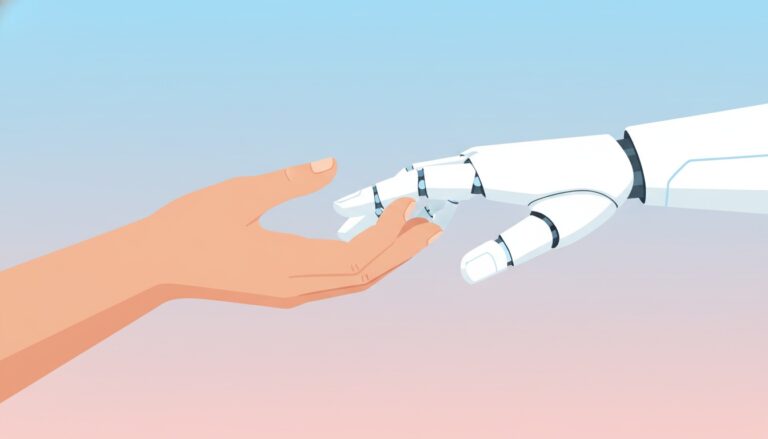
🤖 Future Talk: Cyborgs & Posthumanism in Korean!
1. Introduction
Hello, K-Culture lovers! It’s your friendly tutor [Daily Hangul]! 👋✨
Have you watched Korean Sci-Fi movies like “Space Sweepers (승리호)”, “Jung_E (정이)”, or the drama “Are You Human? (너도 인간이니?)”? 🚀
Today, we are going to dive into a very cool and slightly intellectual topic: Posthumanism (후기인간론) and Cyborg Literature! Don’t worry if it sounds difficult. We will learn how to talk about the future, technology, and what it means to be human using simple and fancy Korean expressions.
If you want to discuss deep topics with your Korean friends or understand the deeper meaning behind Sci-Fi K-Dramas, this lesson is for you! Let’s upgrade your Korean! 🆙💻
2. Key Expressions (핵심 표현)
Here are 3 key expressions to make you sound like a literary critic!
1. 인간의 조건 (The condition of being human)
- Pronunciation: [Ingan-ui jogeon]
- Meaning: The condition of being human / What makes us human
- Explanation: This is a classic phrase used in literature and philosophy. When you see a cyborg in a movie showing emotions, you can ask, “What is the true condition of being human?”
- 💡 Pronunciation Tip: In spoken Korean, the particle ‘의’ (ui) is often pronounced as ‘에’ (e) to make it easier. So, you might hear [Ingan-e jogeon]!
2. 경계가 흐려지다 (The boundary becomes blurred)
- Pronunciation: [Gyeonggye-ga heuryeojida]
- Meaning: The boundary becomes blurred
- Explanation: In Posthumanism, the line between humans and machines (or animals) isn’t clear. Use this when you can’t tell if a character is a robot or a human.
- 💡 Pronunciation Tip: ‘흐’ (heu) is a deep sound from your throat. Also, due to the flow, ‘려’ (ryeo) connects smoothly with the previous sound.
3. 공존하다 (To coexist)
- Pronunciation: [Gongjonhada]
- Meaning: To coexist
- Explanation: This is a very useful verb! It means living together in harmony. In Sci-Fi stories, humans must learn to coexist with AI and cyborgs.
- 💡 Pronunciation Tip: The ‘J’ in ‘Jon’ is a tense sound. Pronounce it clearly and slightly strongly.
3. Real-life Dialogue (실전 대화)
Let’s see how Minji and Alex talk about a Sci-Fi movie they just watched!
Minji: 방금 그 영화 어땠어? 로봇이 우는 장면이 너무 슬펐어.
(How was the movie? The scene where the robot cried was so sad.)
Alex: 맞아. 그 장면을 보니까 인간의 조건이 무엇인지 생각하게 됐어.
(Right. Watching that scene made me think about what the condition of being human is.)
Minji: 요즘은 정말 인간과 기계의 경계가 흐려지는 것 같아.
(These days, it really feels like the boundary between humans and machines is becoming blurred.)
Alex: 미래에는 우리가 로봇과 함께 공존해야 하니까, 중요한 문제야.
(Since we have to coexist with robots in the future, it’s an important issue.)
4. Culture Tip & Drama Context 📺
Did you know?
In Western Sci-Fi, robots are often portrayed as logical or dangerous (like Terminator). However, in Korean Sci-Fi (K-Sci-Fi), there is a strong focus on “Jeong” (정 – affection/bond) and “Han” (한 – deep sorrow/resentment).
Even robots or clones in Korean movies (like in the movie Seobok) often seek family love or have a sad backstory. When you use today’s expressions like “인간의 조건”, try to focus on the emotional side of the character. It will make your analysis sound very Korean! 🇰🇷❤️
5. Wrap-up & Quiz (마무리 및 연습 문제)
Today we learned how to be a Sci-Fi philosopher in Korean!
- 인간의 조건 (What makes us human)
- 경계가 흐려지다 (The boundary blurs)
- 공존하다 (To coexist)
📝 Mini Quiz
Fill in the blanks with the correct words from today’s lesson!
- Humans and AI need to learn how to _______. (인간과 AI는 ______는 법을 배워야 해요.)
- In this movie, the _______ between reality and virtual world is blurred. (이 영화에서는 현실과 가상 세계의 ______가 흐려져요.)
[Answers]
1. 공존하 (Gongjonha) / 공존하다
2. 경계 (Gyeonggye)
See you next time! 안녕! 👋🤖
Frequently Asked Questions (FAQ)
Q: What does "경계가 흐려지다 (The boundary becomes blurred)" mean in Korean and how do you pronounce it?
A: In Korean, "경계가 흐려지다 (The boundary becomes blurred)" is pronounced [Gyeonggye-ga heuryeojida] and means: The boundary becomes blurred
Q: What does "공존하다 (To coexist)" mean in Korean and how do you pronounce it?
A: In Korean, "공존하다 (To coexist)" is pronounced [Gongjonhada] and means: To coexist







