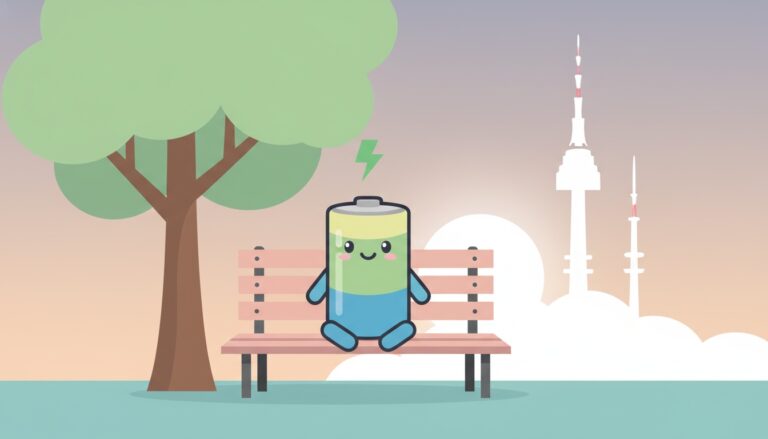
🤯 Escaping the Slump! Korean Phrases to Refresh Your Mind
👋 Hello! Welcome to [Daily Hangul]!
Hello, K-Culture lovers! I’m your friendly Korean tutor, Daily Hangul! 😊
Have you ever felt stuck while studying or working on a creative project? In K-Dramas, you often see the main character sighing deeply at their desk, holding their head. That’s a Slump (슬럼프)!
Today, we will learn how to express that your brain is “stuck” and how to suggest a refreshing break to overcome it. These phrases are super common in daily life and dramas. Let’s power up your Korean skills! 🚀
📚 Key Expressions: Overcoming a Slump
1. 머리가 안 돌아가요 (Meori-ga an doragayo)
- English: My brain isn’t working. (Literally: My head isn’t turning.)
- Detail: This is the perfect phrase when you can’t think of any ideas. In Korean, we say the head “turns” (runs) like a machine. If it doesn’t turn, you are stuck!
- 💡 Pronunciation Tip: When saying 돌아가요 [doragayo], the ‘r/l’ sound flows smoothly. It sounds like ‘do-ra-ga-yo’. Imagine a wheel turning smoothly!
2. 바람 쐬러 가자 (Baram ssoereo gaja)
- English: Let’s go get some fresh air.
- Detail: This is the magic cure in every K-Drama! 🌬️ When someone is stressed, their friend or romantic interest will always say this. It implies going outside for a short walk to reset your mood.
- 💡 Pronunciation Tip: 쐬 [ssoe] is a tricky sound! It sounds a bit like the English word “sweat” without the ‘t’, but with a strong ‘S’. Try to say ‘Ssw-eh’.
3. 멍 때리다 (Meong ttaerida)
- English: To space out / To zone out.
- Detail: ‘Meong’ (멍) is the sound of a blank mind, and ‘ttaerida’ (때리다) means to hit. It means you are staring at nothing and resting your brain. It’s actually considered a good way to relieve stress in Korea!
- 💡 Pronunciation Tip: 때 [ttae] uses the double consonant ‘ㄸ’. You have to tense your tongue and make a strong, sharp ‘T’ sound. Don’t breathe out air!
4. 충전이 필요해 (Chungjeoni piryohae)
- English: I need to recharge.
- Detail: Just like your smartphone, sometimes humans need to recharge too! You can use this when you are physically or mentally exhausted.
- 💡 Pronunciation Tip: 충전 [chungjeon] sounds like ‘choong-jun’. Make sure the ‘J’ is soft.
🗣️ Real-life Conversation
Situation: Minji is stuck on her writing project, and Jason notices she looks tired.
Minji: 아, 아이디어가 없어요. 머리가 안 돌아가요. 😫
(Ah, I have no ideas. My brain isn’t working.)
Jason: 너무 오래 일했어요. 우리 잠깐 바람 쐬러 가자.
(You worked too long. Let’s go get some fresh air for a moment.)
Minji: 좋아요. 지금은 그냥 멍 때리고 싶어요.
(Good. Right now, I just want to space out.)
Jason: 그래, 커피 마시면서 쉬자. 충전이 필요해! ☕
(Yeah, let’s rest while drinking coffee. You need to recharge!)
🎭 Culture Tip & Drama Context
Did you know about the “Space-out Competition”?
In Korea, being busy is often praised, but recently, the importance of rest has grown. There is even a famous event called the “Space-out Competition” (멍 때리기 대회) held at the Han River park! 🌳
People sit on the grass and do absolutely nothing—no phones, no talking, no sleeping. The person with the most stable heart rate wins! So, if you hear “멍 때리다” in a variety show, remember it’s a popular way to heal your brain. Even K-Pop idols talk about doing this to relieve stress!
📝 Wrap-up & Quiz
Today we learned how to say we are stuck and how to take a break. Don’t be afraid of a slump; just go get some fresh air!
Quiz: Fill in the blanks!
- My brain isn’t working. = 머리가 안 ( ______ ).
- Let’s go get some fresh air! = ( ______ ) 쐬러 가자!
- I need to recharge. = ( ______ )이 필요해.
[Answers]
1. 돌아가요 (doragayo)
2. 바람 (Baram)
3. 충전 (Chungjeon)
See you next time! 안녕! 👋
Frequently Asked Questions (FAQ)
Q: What does "머리가 안 돌아가요 (Meori-ga an doragayo)" mean in Korean and how do you pronounce it?
A: In Korean, "머리가 안 돌아가요 (Meori-ga an doragayo)" is pronounced [Tip: When saying 돌아가요 [doragayo] and means: a key conversational Korean expression covered in this lesson.
Q: What does "바람 쐬러 가자 (Baram ssoereo gaja)" mean in Korean and how do you pronounce it?
A: In Korean, "바람 쐬러 가자 (Baram ssoereo gaja)" is pronounced [Tip: 쐬 [ssoe] and means: a key conversational Korean expression covered in this lesson.
Q: What does "멍 때리다 (Meong ttaerida)" mean in Korean and how do you pronounce it?
A: In Korean, "멍 때리다 (Meong ttaerida)" is pronounced [Tip: 때 [ttae] and means: a key conversational Korean expression covered in this lesson.
Q: What does "충전이 필요해 (Chungjeoni piryohae)" mean in Korean and how do you pronounce it?
A: In Korean, "충전이 필요해 (Chungjeoni piryohae)" is pronounced [Tip: 충전 [chungjeon] and means: a key conversational Korean expression covered in this lesson.