

안녕하세요! Hello! It’s your Korean tutor, Daily Hangul! 😊
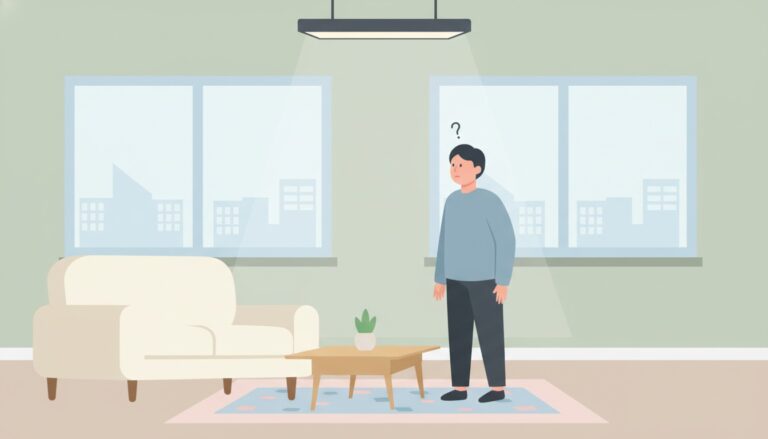
Have you ever watched a K-Drama where the main character tries to change a lightbulb, slips, and falls right into the arms of their crush? 💕 While that’s romantic, in real life, a broken light is just inconvenient! 😅
Today, we are going to learn how to handle a situation when something in your house breaks. Whether you are living in a Korean apartment or staying at an Airbnb, these expressions are survival essentials! Let’s light up your Korean skills! 🕯️✨
🔑 Core Expressions (핵심 표현)
Here are the top 3 phrases you need when things go dark!
1. 전등이 안 켜져요.
- Pronunciation: [Jeondeung-i an kyeojyeoyo]
- Meaning: The light won’t turn on.
- Detail: ‘전등’ (Jeondeung) means ‘electric light’, and ‘안’ (an) is a magic word for ‘not’. You can use this pattern for other appliances too! (e.g., TV가 안 켜져요 / The TV won’t turn on).
2. 고장 났어요.
- Pronunciation: [Gojang nasseoyo]
- Meaning: It is broken.
- Detail: This is the most common way to say a machine or object is not working. You can point at anything broken and say this!
- 💡 Pronunciation Tip: Even though it is written as ‘났어요’ (nasseoyo), say it naturally and smoothly. The ‘ss’ sound is strong!
3. 고쳐 주세요.
- Pronunciation: [Gochyeo juseyo]
- Meaning: Please fix it.
- Detail: ‘고치다’ (Gochida) means ‘to fix’. Adding ‘주세요’ (Juseyo) makes it a polite request. Use this with your landlord or a repairman.
💬 Real Conversation (실전 대화)
Let’s see how to talk to your landlord (집주인) or the management office (관리실).
Situation: You call the landlord because the bathroom light is out.
👤 You: 여보세요? 화장실 전등이 안 켜져요.
(Yeoboseyo? Hwajangsil jeondeung-i an kyeojyeoyo.)
[Hello? The bathroom light won’t turn on.]
🏠 Landlord: 어? 정말요? 전구가 나갔나요?
(Eo? Jeongmalyo? Jeonguga nagannayo?)
[Oh? Really? Did the bulb burn out?]
👤 You: 잘 모르겠어요. 고장 났어요. 와서 봐 주세요.
(Jal moreugesseoyo. Gojang nasseoyo. Waseo bwa juseyo.)
[I’m not sure. It’s broken. Please come and check.]
🏠 Landlord: 네, 알겠어요. 금방 갈게요.
(Ne, algesseoyo. Geumbang galkeyo.)
[Okay, I understand. I’ll be there soon.]
🇰🇷 Culture Tip & K-Drama Vibes
“Jeonse (전세) vs. Wolse (월세)”
In Korea, housing is often divided into Jeonse (large deposit, no monthly rent) and Wolse (monthly rent). Usually, for major repairs (like broken boilers or pipes), the landlord (집주인) is responsible. However, for small consumables like lightbulbs (전구), the tenant (세입자) often has to replace them themselves! 🏠
But if you are in a K-Drama, don’t change the bulb yourself! Wait for a handsome neighbor to help you! 😉 just kidding!
📝 Wrap-up & Quiz
Today we learned how to ask for help when things break. Don’t sit in the dark—speak up in Korean!
Pop Quiz! (Fill in the blanks)
- The TV is broken! = TV가 OOOO.
- Please fix this. = OOO 주세요.
Great job today! See you next time! 안녕! 👋
Answers: 1. 고장 났어요 (Gojang nasseoyo), 2. 고쳐 (Gochyeo)
Frequently Asked Questions (FAQ)
Q: What does "전등이 안 켜져요." mean in Korean and how do you pronounce it?
A: In Korean, "전등이 안 켜져요." is pronounced [Jeondeung-i an kyeojyeoyo] and means: The light won't turn on.
Q: What does "고장 났어요." mean in Korean and how do you pronounce it?
A: In Korean, "고장 났어요." is pronounced [Gojang nasseoyo] and means: It is broken.
Q: What does "고쳐 주세요." mean in Korean and how do you pronounce it?
A: In Korean, "고쳐 주세요." is pronounced [Gochyeo juseyo] and means: Please fix it.






