

Book Your Dream Korea Tour Like a Pro!
Hello! Welcome to Daily Hangul, here to upgrade your Korean skills!
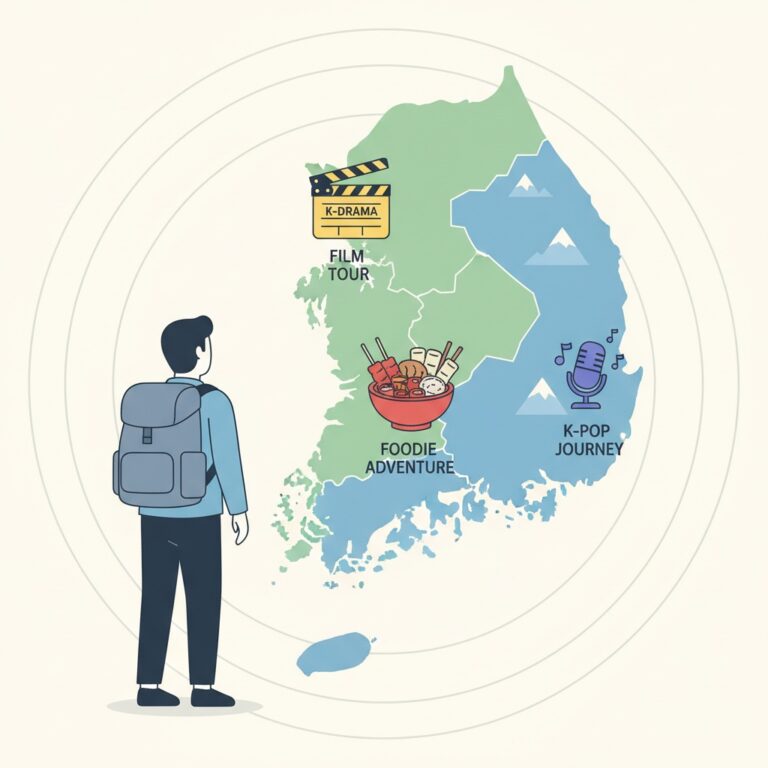
Planning a trip to Korea? Awesome! But are you tired of the usual tourist spots? Do you want to dive deeper into the real Korea? You’re in luck! Lately in Korea, unique, themed tours are all the rage. From visiting the filming locations of your favorite K-dramas to joining a foodie tour through a bustling traditional market, there’s a special experience waiting for you.
Today, we’ll learn the essential Korean phrases to book these amazing guided tours and ask all the important questions. Let’s get you ready for an unforgettable adventure!
Core Expressions You Need to Know
Here are the key phrases that will make you sound like a confident traveler when booking your tour.
1. ~ 투어 예약하고 싶은데요. (~ tueo yeyakago sipeundeyo.)
- Pronunciation: [~ tueo yeyakago sipeundeyo]
- English Meaning: I would like to book the ~ tour.
- Detailed Explanation: This is the perfect, polite way to start your booking conversation. The ending
~고 싶은데요 (~go sipeundeyo)is a soft and natural way to express what you want, making it much more conversational than a direct statement like~고 싶어요 (~go sipeoyo). You can put the name of the tour in the blank. For example, “서울 시티 투어 예약하고 싶은데요.” (Seoul city tueo yeyakago sipeundeyo.) - 💡 Pronunciation Tip: The magic is in the
~데요 (~deyo)ending. It adds a nuance of “I was thinking of…” or “I’d like to, if possible…” which is very common in polite Korean conversation. Practice sayingsi-peun-de-yosmoothly.
2. 혹시 ~ 포함인가요? (Hoksi ~ pohamingayo?)
- Pronunciation: [hokssi ~ pohamingayo]
- English Meaning: By any chance, is ~ included?
- Detailed Explanation: This phrase is your best friend for checking details.
혹시 (hoksi)is a wonderful word that means “by any chance” or “perhaps.” Adding it before a question makes you sound extra considerate and polite.포함인가요? (pohamingayo?)is the question form of “is included.” You can insert nouns like점심 식사(jeomsim siksa – lunch) or입장료(ipjangnyo – entrance fee) in the blank. - 💡 Pronunciation Tip: Notice how
포함인가요is pronounced. The finalㅁ (m)sound of포함 (poham)links directly to theㅣ (i)vowel that follows it. This is a liaison rule called ‘연음 (yeoneum)’. So, instead of a choppypoham-in-gayo, it flows smoothly as [po-ha-min-ga-yo].
3. 최소 인원이 몇 명이에요? (Choeso inwoni myeot myeong-ieyo?)
- Pronunciation: [choeso inwoni myeon myeongieyo]
- English Meaning: What is the minimum number of people?
- Detailed Explanation: Some special tours only run if a certain number of people sign up. This question helps you check that. Let’s break it down:
최소 (choeso)means “minimum,”인원 (inwon)means “number of people,” and몇 명이에요? (myeot myeong-ieyo?)means “how many people is it?”. - 💡 Pronunciation Tip: The pronunciation of
몇 명 (myeot myeong)is a bit tricky! The final consonantㅊ (t)in몇is not pronounced as “ch.” Before a nasal consonant likeㅁ (m), it changes to aㄴ (n)sound. This is a nasalization rule. So, you pronounce it as [면 명 / myeon myeong], not [myeot myeong]. This will make you sound much more natural!
Example Dialogue
Let’s see these phrases in action! Imagine a traveler named Alex is calling to book a K-drama filming location tour.
- Alex (A): 여보세요. DMZ 투어 예약하고 싶은데요.
- (Yeoboseyo. DMZ tueo yeyakago sipeundeyo.)
- Hello. I’d like to book the DMZ tour.
- Tour Guide (B): 네, 가능합니다. 원하시는 날짜가 있으세요?
- (Ne, ganeunghamnida. Wonhasineun naljjaga isseuseyo?)
- Yes, that’s possible. Do you have a specific date in mind?
- Alex (A): 다음 주 금요일이요. 혹시 점심 식사는 포함인가요?
- (Daeum ju geumnyoiriyo. Hoksi jeomsim siksaneun pohamingayo?)
- Next Friday. By any chance, is lunch included?
- Tour Guide (B): 아니요, 점심은 포함되어 있지 않습니다. 투어 출발 최소 인원이 몇 명이에요?
- (Aniyo, jeomsimeun pohamdoe-eo itji anseumnida. Tueo chulbal choeso inwoni myeot myeong-ieyo?)
- No, lunch is not included. What is the minimum number of people for the tour to depart?
- Alex (A): 아, 저희는 두 명이에요.
- (A, jeohuineun du myeong-ieyo.)
- Ah, there are two of us.
- Tour Guide (B): 두 분이시면 충분합니다!
- (Du bunisimyeon chungbunhamnida!)
- Two people is plenty!
Culture Tip & Trend Deep Dive
In Korea right now, “experience-based travel” (체험 여행 - cheheom yeohaeng) is huge. People, especially the younger generation, want more than just seeing landmarks. They want to do something memorable.
This has led to a boom in “theme tours” (테마 투어 - tema tueo). You can find tours for almost any interest:
* K-Pop Dance Class Tour: Learn the choreography of your favorite idols from a professional instructor.
* Traditional Market Food Tour: A guide takes you to the hidden gems in places like Gwangjang Market to taste the most authentic Korean street food.
* K-Drama Filming Location Tour: Visit the exact spots where iconic scenes from dramas like “Queen of Tears” or “Goblin” were filmed.
Using the phrases we learned today, you can confidently call local tour agencies and book these unique experiences. Asking “최소 인원이 몇 명이에요?” is especially useful for these smaller, specialized tours. Knowing these expressions shows you’re not just a tourist; you’re a traveler who’s serious about experiencing the real culture!
Let’s Wrap It Up & Practice!
Great job today! You’ve learned how to:
* Politely say you want to book a tour (~ 투어 예약하고 싶은데요).
* Ask what’s included (혹시 ~ 포함인가요?).
* Check the minimum number of participants (최소 인원이 몇 명이에요?).
Now it’s your turn to practice!
Quick Quiz:
You want to book a tour and need to know if the entrance fee (입장료 - ipjangnyo) is included in the price. How would you ask politely?
Fill in the blank: 혹시 ___________ 포함인가요?
Got the answer? Try making your own sentences in the comments below! Tell us what kind of Korean tour you’d like to book using the phrases you learned today. We’d love to see them







