Korean Policy’s Hidden Traps: Unmasking Unintended Consequences
Hello! Welcome to [Maeil Hangeul], your go-to source for upgrading your Korean to an expert level!
Today, we’re moving beyond everyday conversation and stepping into the world of high-level discourse. We’ll be tackling a topic you’ll frequently encounter in Korean news, academic papers, and intellectual debates: Public Policy and its Unintended Consequences. Ever wonder how to sound like a policy analyst when discussing current events in Korea? This lesson is for you.
Lately in Korea, there’s been intense discussion around various government initiatives, from real estate regulations to environmental policies. A common theme in these debates is that a well-intentioned policy can sometimes create a completely unexpected, and often negative, new problem. Mastering the vocabulary to articulate this is a hallmark of an advanced speaker. Let’s dive in!
Core Expressions for Policy Analysis
Here are the essential terms you need to discuss the complex outcomes of policy decisions.
1. 의도치 않은 결과 (Uidochi Aneun Gyeolgwa)
- Romanization: Uidochi aneun gyeolgwa
- English: Unintended consequence(s)
- Detailed Explanation: This is the cornerstone phrase. It’s a formal, neutral term used to describe any outcome—positive, negative, or neutral—that was not the original goal of a policy or action. It’s composed of 의도 (uido: intention), the negative grammar pattern -치 않다 (chi anta: to not do), and 결과 (gyeolgwa: result). While you might know the word 부작용 (bujagyong: side effect), that term carries a strongly negative connotation. 의도치 않은 결과 is more objective and analytical, making it perfect for formal reports and discussions.
- 💡 Pronunciation Tip: The key is the pronunciation of 않은 [아는/aneun]. In Korean, the consonant ‘ㅎ’ (h) is often silent when it’s in the final position of a syllable block and is followed by a vowel. So, instead of a clunky “an-heun,” the sounds flow together smoothly into [aneun]. This ‘ㅎ’ elision (ㅎ 탈락) is crucial for a natural accent.
2. 풍선 효과 (Pungseon Hyogwa)
- Romanization: Pungseon hyogwa
- English: Balloon effect
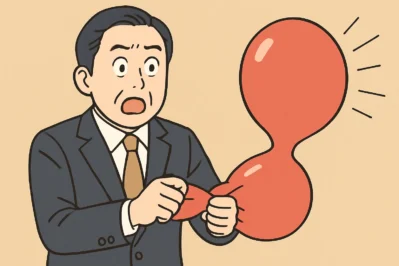
- Detailed Explanation: This is a brilliant and widely used metaphor to describe a specific type of unintended consequence. It refers to a situation where an attempt to solve a problem in one area simply displaces it to another, just like squeezing one part of a balloon makes another part bulge. You’ll hear this constantly in Korean news, especially regarding economic and social regulations. For example, cracking down on real estate speculation in Seoul might cause housing prices in neighboring cities to skyrocket—a classic 풍선 효과.
- 💡 Pronunciation Tip: Pay attention to the aspirated consonants ‘ㅍ’ (p) and ‘ㅋ’ (k) in 풍선 (pungseon) and 효과 (hyogwa). These sounds require a strong puff of air. To check yourself, hold a piece of paper in front of your mouth. When you say “pung” or “hyo,” the paper should flutter significantly more than when you pronounce unaspirated sounds like ‘ㅂ’ (b) or ‘ㄱ’ (g).
3. ~는/은/ㄴ 나머지 (-neun/eun/n Nameoji)
- Romanization: -neun/eun/n nameoji
- English: As a result of (doing something) to an extreme; because of…
- Detailed Explanation: This advanced grammar pattern is perfect for explaining a negative outcome that resulted from an excessive or one-sided action. It carries the nuance that “because X went too far, Y happened.” It powerfully connects a cause to its unintended, negative effect. It attaches to verbs and adjectives to describe the preceding clause as the extreme reason for the following negative result.
- Example: 정부가 단기적 성과에만 집착한 나머지 장기적인 문제를 외면했다. (The government was so obsessed with short-term results that, as a consequence, it ignored long-term problems.)
- 💡 Pronunciation Tip: The pronunciation is straightforward, but the key is understanding its grammatical function. When attached to a verb stem ending in a consonant, you use -은 나머지 (e.g., 먹은 나머지). For verb stems ending in a vowel, it’s -ㄴ 나머지 (e.g., 한 나머지). For the present tense, you use -는 나머지 (e.g., 하는 나머지).
Sample Dialogue
Let’s see how these expressions play out in a real conversation between two policy students, Jimin (A) and Sujin (B), discussing a new environmental policy.
A: 그 일회용 컵 보증금 제도, 시행 초반이라지만 의도치 않은 결과가 벌써부터 보이는 것 같아요.
(A: That new disposable cup deposit system… I know it’s just started, but it seems like we’re already seeing some unintended consequences.)
B: 맞아요. 전형적인 풍선 효과죠. 카페에서 일회용 컵 사용이 줄어드니, 사람들이 대신 편의점에서 페트병 음료를 더 많이 사더라고요.
(B: I agree. It’s a classic balloon effect. Since disposable cup usage is down at cafes, people are just buying more drinks in plastic bottles from convenience stores instead.)
A: 정확해요. 정부가 컵 쓰레기를 줄이는 데에만 집중한 나머지, 전체 플라스틱 소비량 변화는 예측하지 못한 거죠.
(A: Exactly. The government was so focused on reducing cup waste that, as a result of that narrow focus, they failed to predict the change in overall plastic consumption.)
B: 이 현상의 정책적 함의는 결국 통합적인 접근이 필요하다는 것이겠네요.
(B: I guess the policy implication of this phenomenon is that a more integrated approach is necessary.)
(Note: 정책적 함의 (jeongchaekjeok hamui) is another key C2-level term meaning “policy implication,” perfect for concluding an analytical point!)
Culture Tip & Trend Deep-Dive
In Korea, the concept of “빨리빨리” (ppalli-ppalli), or “hurry, hurry” culture, can sometimes influence policymaking. The public and political desire for quick, visible results can lead to policies that are rolled out hastily without a thorough analysis of potential downstream effects.
A famous real-world example is the “단통법” (Dantongbeop), a law enacted to standardize mobile phone subsidies. The intention was to eliminate discriminatory pricing and create a fairer market. However, the 의도치 않은 결과 was that it effectively ended the generous subsidies consumers were used to, making it more expensive for everyone to buy a new phone. The media heavily criticized this, often using the term 풍선 효과 to describe how consumers, unable to find good deals legally, flocked to illegal markets or alternative methods, defeating the law’s purpose.
Understanding these terms allows you to not only comprehend but also critically engage with the ongoing public discourse in Korea, just like a native expert.
Let’s Review and Practice!
Today we learned how to discuss policy outcomes with nuance and precision. We covered:
* 의도치 않은 결과: The neutral, formal term for unintended consequences.
* 풍선 효과: The “balloon effect” metaphor for problem displacement.
* ~는/은/ㄴ 나머지: The grammar for linking an extreme action to its negative result.
Now, let’s put your knowledge to the test!
- Fill in the blank:
- 과도한 재택근무 정책은 사무실 임대료를 안정시켰지만, 상업 지구의 공동화를 초래하는 __________을/를 낳았다.
- (The excessive work-from-home policy stabilized office rents, but it produced the __________ of hollowing out commercial districts.)
Ready to think like a policy analyst? Try to describe an unintended consequence of a policy in your own country using the expressions we learned today. Leave your sentence in the comments below! We’d love to see how you use them.