

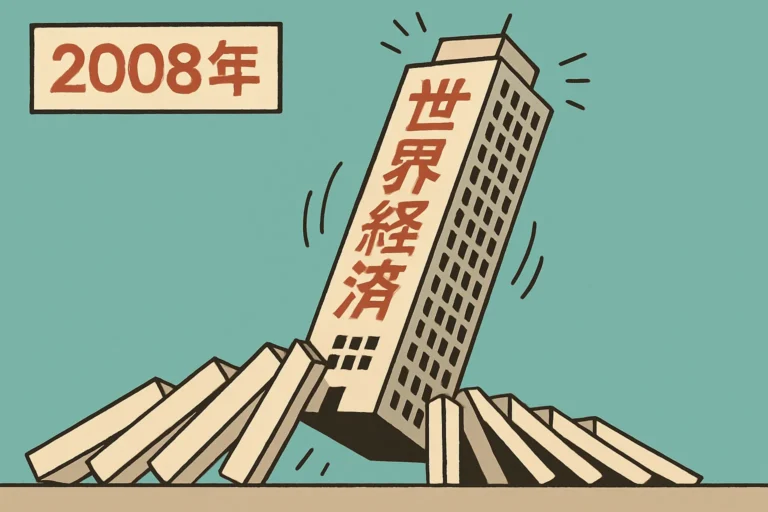
From Wall Street to Yeouido: Decoding the 2008 Financial Crisis in Korean
Hello! Welcome back to [Maeil Hangeul], your trusted partner for upgrading your Korean skills!
Today, we’re diving deep into a topic that shaped the modern world: the 2008 Global Financial Crisis. Why discuss this now? Well, in Korea, conversations about the economy, investment, and financial stability are more intense than ever. Understanding the vocabulary used to describe the 2008 crisis will not only help you comprehend news articles and expert discussions but also grasp the deep-seated economic anxieties and trends shaping Korean society today. Let’s dissect the language used to talk about this pivotal moment in history!
Core Expressions for Economic Analysis
Here are some essential terms you need to know to discuss the financial crisis like a pro.
1. 서브프라임 모기지 사태 (Seobeupeuraim mogiji satae)
- Pronunciation [Romanization]: [Seo-beu-peu-ra-im mo-gi-ji sa-tae]
- English Meaning: The subprime mortgage crisis.
- Detailed Explanation: This is the direct Korean transliteration for the event that triggered the 2008 crisis. It’s a compound noun:
- 서브프라임 (seobeupeuraim): “Subprime,” referring to loans given to individuals with poor credit history.
- 모기지 (mogiji): “Mortgage.”
- 사태 (satae): A “situation,” “state of affairs,” or more strongly, a “crisis” or “disaster.” This word implies a serious, large-scale negative event. You’ll often see it in contexts like ‘IMF 사태’ (The IMF Crisis of 1997).
- 💡 Pronunciation Tip:
While it’s a long phrase, Koreans pronounce it as a single unit. Pay attention to the even rhythm. The ‘프(peu)’ and ‘라(ra)’ in ‘서브프라임’ are pronounced clearly without blending. There are no complex pronunciation rules here, but mastering the cadence of this long, borrowed term is key to sounding natural.
2. 파생상품 (Pasangsaengpum)
- Pronunciation [Romanization]: [Pa-sang-saeng-pum]
- English Meaning: Financial derivatives.
- Detailed Explanation: This term is crucial for understanding the mechanics of the crisis. It literally means “derived product.” 파생 (pasang) means “derivation” and 상품 (sangpum) means “product” or “commodity.” It refers to complex financial instruments whose value is derived from an underlying asset. This term is standard in economic news and academic papers.
- 💡 Pronunciation Tip:
The key here is the nasalization rule. The final consonant ‘ㅂ(b)’ in ‘파생상품‘ is not pronounced. Instead, the word is often pronounced closer to [파생상품(pa-sang-sang-pum)] in casual speech, though the official pronunciation holds the ‘p’ sound. More importantly, when ‘생(saeng)’ is followed by ‘상(sang)’, the sounds can feel very close. Practice distinguishing them clearly: ‘saeng’ has a slightly more closed ‘e’ sound.
3. 도덕적 해이 (Dodeokjeok haei)
- Pronunciation [Romanization]: [Do-deok-jjeok hae-i]
- English Meaning: Moral hazard.
- Detailed Explanation: This is a sophisticated socio-economic concept. 도덕적 (dodeokjeok) means “moral,” and 해이 (haei) means “laxity” or “slackness.” It describes a situation where a party is more willing to take risks because the potential costs or consequences will be borne by others. It was widely used to criticize financial institutions that took excessive risks, knowing they would likely be bailed out by the government.
- 💡 Pronunciation Tip:
The pronunciation of ‘적’ [jeok] followed by ‘해’ [hae] is interesting. Unlike many cases where the final consonant would link to the next vowel (liaison), here they are often pronounced distinctly: [도덕쩍(do-deok-jjeok)] followed by [해이(hae-i)]. The ‘ㄱ’ in ‘적’ becomes a tensed sound [ㄲ] due to a phenomenon called ‘사이시옷’ (intervocalic ㅅ), which is implied but not written. This tensing adds emphasis and is a feature of advanced pronunciation.
4. 구제금융 (Gujegeumyung)
- Pronunciation [Romanization]: [Gu-je-geum-nyung]
- English Meaning: Bailout (literally “relief financing”).
- Detailed Explanation: This term refers to the financial assistance provided by a government or other institution to a failing company or economy. 구제 (guje) means “relief” or “rescue,” and 금융 (geumyung) means “finance.” It was the controversial solution implemented by governments worldwide to prevent a total collapse of the financial system.
- 💡 Pronunciation Tip:
This word is a perfect example of nasalization. The word is written as ‘금융 (geum-yung)’, but the ‘ㄱ(g)’ sound in ‘금’ influences the following ‘ㅇ(y)’, causing it to be pronounced as [금융(geum-nyung)]. The ‘ㄱ’ is softened and assimilated into the nasal ‘ㄴ(n)’ sound. Pronouncing it as [구제금늉] will make you sound instantly more fluent.
Example Dialogue
Let’s see how these terms are used in a natural conversation between two friends discussing the economy.
A: 요즘 주식 시장이 불안해서 2008년 서브프라임 모기지 사태 때가 자꾸 생각나.
(Y즘 jusik sijang-i buranhaeseo icheon-pal-nyeon seobeupeuraim mogiji satae ttaega jakku saenggangna.)
A: The stock market is so volatile these days, it keeps reminding me of the 2008 subprime mortgage crisis.
B: 맞아. 그때 복잡한 파생상품에 대한 이해 없이 무분별하게 투자했던 게 문제였지. 금융기관들의 도덕적 해이도 심각했고.
(Maja. Geuttae bokjapan pasangsaengpum-e daehan ihae eopsi mubunbyeolhage tuja-haetdeon ge munjeyeotji. Geumyung-gigwandeul-ui dodeokjeok haei-do simgak-haetgo.)
B: Exactly. The problem was reckless investment in complex derivatives without proper understanding. The moral hazard of financial institutions was severe, too.
A: 결국엔 막대한 세금을 투입해서 구제금융으로 해결했지만, 그 여파가 아직도 남아있는 것 같아.
(Gyeolgugen makdaehan segeum-eul tuip-haeseo gujegeumyung-euro haegyeol-haetjiman, geu yeopa-ga ajikdo nama-inneun geot gata.)
A: In the end, they solved it with a bailout using enormous amounts of taxpayer money, but I feel like the aftereffects still linger today.
Cultural Tip & Trend Analysis: The Lingering Shadow
The 2008 Global Financial Crisis left a deep scar on the South Korean psyche. Here’s how it connects to modern trends:
- The Rise of “Hell Joseon” (헬조선): While the term existed before, the post-2008 economic slowdown, characterized by intense job competition and soaring real estate prices, popularized the cynical term 헬조선 (heljoseon). It reflects a deep-seated pessimism among younger generations who feel trapped in a hyper-competitive society with diminishing opportunities—a direct consequence of the economic instability that followed the crisis.
- The “Donghak Ant Movement” (동학개미운동): The crisis eroded trust in traditional financial institutions. This distrust, combined with the economic pressures of the COVID-19 pandemic, fueled a massive surge in retail investing known as the 동학개미운동 (donghakgaemiundong). Millions of small-scale investors (“ants”) began investing directly in the stock market, seeking financial independence outside of conventional systems. Understanding the 2008 crisis provides crucial context for this massive social phenomenon.
Knowing the vocabulary from today’s lesson allows you to engage in profound discussions about these ongoing social and economic trends in Korea.
Wrap-up & Practice
Today, we explored the complex vocabulary needed to discuss the 2008 Global Financial Crisis. We learned about the 서브프라임 모기지 사태, the dangers of 파생상품, the concept of 도덕적 해이, and the controversial solution of 구제금융.
Now, it’s your turn to think critically!
Practice Question:
2008년 금융 위기가 오늘날 한국 사회에 미친 가장 큰 영향은 무엇이라고 생각하십니까? 오늘 배운 표현을 최소 두 개 이상 사용하여 여러분의 분석을 댓글로 공유해 주세요.
(What do you believe is the most significant impact of the 2008 financial crisis on contemporary Korean society? Please share your analysis in the comments, using at least two of the expressions you learned today.)
We look forward to reading your insightful opinions! Keep up the great work
Frequently Asked Questions (FAQ)
Q: What does "서브프라임" mean in Korean and how do you pronounce it?
A: In Korean, "서브프라임" is pronounced [seobeupeuraim] and means: "Subprime," referring to loans given to individuals with poor credit history.
Q: What does "모기지" mean in Korean and how do you pronounce it?
A: In Korean, "모기지" is pronounced [mogiji] and means: "Mortgage."
Q: What does "사태" mean in Korean and how do you pronounce it?
A: In Korean, "사태" is pronounced [satae] and means: A "situation," "state of affairs," or more strongly, a "crisis" or "disaster." This word implies a serious, large-scale negative event. You'll often see it in contexts like 'IMF 사태' (The IMF Crisis of 1997).
Q: What does "파생" mean in Korean and how do you pronounce it?
A: In Korean, "파생" is pronounced [pasang] and means: means "derivation" and







