
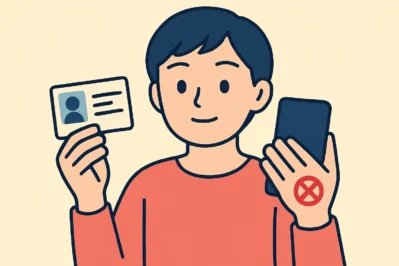
Hello! This is [Maeil Hangul], here to upgrade your Korean skills to the next level!
Today, we are diving into a slightly more serious but incredibly important topic: Civic Duty. Specifically, we will look at the Voter Registration Procedures (유권자 등록 절차).
You might think this sounds difficult, but lately in Korea, administrative systems have become incredibly convenient and digital-friendly! With the rise of “Digital Democracy,” many procedures can now be done via smartphone apps or simple online verification. Whether you are a permanent resident eligible for local elections or just interested in Korean society, understanding these terms will make you sound like a true local expert.
Let’s master the language of civic duty together!
Core Expressions
Here are 4 key expressions you need to know when talking about elections and administrative procedures in Korea.
1. 유권자 등록 (Voter registration)
- Pronunciation: [Yugwonja deungnok]
- English Meaning: Voter registration
- Detail: ‘유권자’ means ‘voter’ (literally: person with rights) and ‘등록’ means ‘registration.’ This is the official term used when signing up to vote.
- 💡 Pronunciation Tip:
- The word 등록 is tricky! It is written as
deung-rokbut pronounced [deung-nok]. - This is due to ‘Nasalization’ (비음화). When the final consonant ‘ㅇ(ng)’ meets the initial consonant ‘ㄹ(r/l)’, the ‘ㄹ’ changes to a generic ‘ㄴ(n)’ sound to make it flow smoother. So, say it softly: Deung-nok.
- The word 등록 is tricky! It is written as
2. 절차를 밟다 (To go through procedures)
- Pronunciation: [Jeolchareul baptta]
- English Meaning: To go through/follow the procedures
- Detail: This is a B2-level idiom. ‘밟다’ literally means ‘to step on,’ but here it means ‘to undergo a process.’ You use this in formal settings like immigration, banking, or government offices.
- 💡 Pronunciation Tip:
- 밟다 is written with a double final consonant
lb, but it is pronounced [bap-tta]. - Usually, in the
lbcluster, thelis pronounced. However, 밟다 is a special exception where theb(ㅂ) is pronounced and thelis silent before a consonant. Also, the following ‘다’ becomes tense [tta] (Tensification).
- 밟다 is written with a double final consonant
3. 신분증을 지참하다 (To bring one’s ID)
- Pronunciation: [Sinbunjeung-eul jichamhada]
- English Meaning: To bring/carry identification
- Detail: ‘지참하다’ is a formal version of ‘가져오다’ (to bring). You will see this written on official notices or hear it from government employees.
- 💡 Pronunciation Tip:
- When saying 신분증을, use ‘Liaison’ (연음). The final ‘ㅇ’ carries over to the empty ‘ㅇ’ in ‘을’.
- It sounds like [Sin-bun-jeung-ngeul]. Connecting the sounds makes you sound much more fluent!
4. 사전 투표 (Early voting)
- Pronunciation: [Sajeon tupyo]
- English Meaning: Early voting
- Detail: Korea has a very active ‘Early Voting’ system to encourage participation. It usually happens a few days before the actual election day.
- 💡 Pronunciation Tip:
- 투표 (Voting) is often pronounced with a stronger sound on the second syllable: [Tu-ppyo].
- This is a phenomenon called ‘Tensification’ (경음화), which happens frequently in Sino-Korean words to add emphasis.
Real-Life Dialogue
Let’s see how these expressions are used in a conversation between Minji (Korean) and Alex (a long-term resident in Korea).
Minji: 알렉스 씨, 이번 지방 선거 때 투표해요?
(Alex, are you voting in this local election?)Alex: 네, 저는 영주권이 있어서 투표할 수 있어요. 그런데 유권자 등록은 어떻게 하죠?
(Yes, I have permanent residency so I can vote. But how do I do the voter registration?)Minji: 요즘은 인터넷으로 간단하게 절차를 밟을 수 있어요. 제가 사이트 알려줄게요.
(These days, you can simply go through the procedures online. I’ll let you know the website.)Alex: 아, 정말요? 그럼 투표하러 갈 때는 무엇이 필요해요?
(Oh, really? Then what do I need when I go to vote?)Minji: 신분증을 지참해야 해요. 혹시 바쁘면 사전 투표를 해도 되고요!
(You must bring your ID. If you are busy, you can also do early voting!)
Culture Tip & Trend Analysis
🗳️ The “Vote Certification Shot” (투표 인증샷) Culture
Did you know that voting in Korea is also a huge social media trend?
In the “[Recent Trends],” young Koreans (MZ Generation) love to take a “Vote Certification Shot” (인증샷).
- Hand Stamp: People used to stamp the red voting mark on the back of their hand and take a photo outside the polling station. (Note: Due to hygiene/COVID-19, this has shifted more to photo cards recently).
- Character Cards: Lately, people bring clear photo cards with their favorite idol or character to take a picture against the polling station sign.
Also, a surprising fact for many foreigners: South Korea allows non-citizens to vote in local elections! If you have held a permanent residency visa (F-5) for more than 3 years, you are eligible. Knowing words like 유권자 등록 (Voter registration) isn’t just for study—it might be for your actual rights in Korea!
Wrap-up & Quiz
Today we learned how to talk about civic duties and voting procedures. These expressions are very useful not just for elections, but for any formal situation requiring registration or ID in Korea.
Let’s check your understanding!
[Quiz] Fill in the blank with the correct expression:
“To vote, you must _______ (bring your ID) to the polling station.”
(투표를 하려면 투표소에 __________ 합니다.)
- 유권자 등록을 해야
- 신분증을 지참해야
Answer: _____ (Check the comment section for the answer!)
If you enjoyed this lesson, please leave a comment below using one of the expressions we learned today! See you next time!