

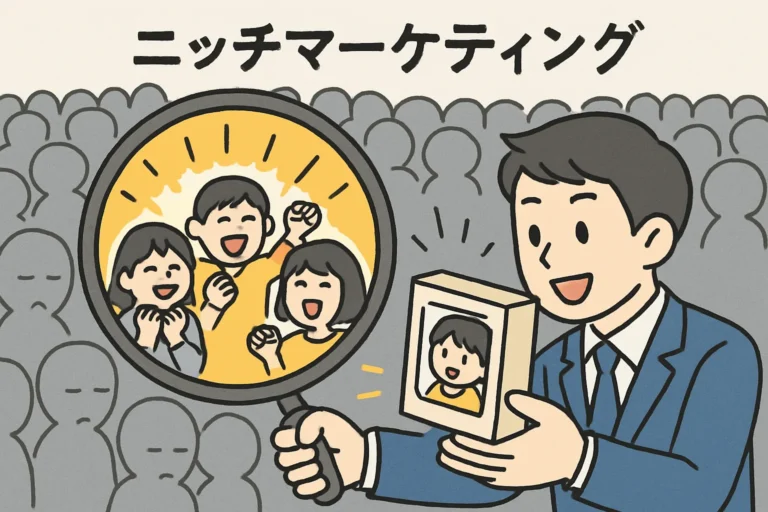
Beyond K-Pop: Cracking Korea’s Niche Marketing Code!
Hello! Welcome back to [Maeil Hangeul], your key to unlocking the next level of Korean!
Ready to move beyond everyday conversation and into the language of Korean business and culture? Today, we’re diving deep into a fascinating topic: how companies in Korea connect with passionate fan communities. Lately in Korea, the “one-size-fits-all” marketing strategy is becoming a thing of the past. Instead, the smartest brands are targeting specific subcultures with laser precision. Understanding this is essential whether you’re in marketing, business, or simply want to grasp the dynamics of modern Korean society. Let’s get started!
Core Expressions for Market Masters
Here are the key terms you need to know to discuss this trend like a pro.
1. 틈새시장 (Teumsae Sijang)
- Romanization: [Teumsae sijang]
- English Meaning: Niche market
- Detailed Explanation: This term literally translates to “crack market” or “gap market.” It refers to a specific, often overlooked, segment within a larger market. In a hyper-competitive environment like Korea, successfully identifying and catering to a 틈새시장 is a hallmark of a brilliant business strategy. It’s about finding a small but highly dedicated group of customers and serving them perfectly, rather than trying to appeal to everyone. This is a standard term used in business reports and marketing meetings.
- 💡 Pronunciation Tip: The ‘새’ (sae) is a clean, single vowel sound, similar to the ‘se’ in the English word ‘set’. For ‘시장’ [sijang], make sure the final ‘ㅇ’ (ng) is a soft nasal sound made in the back of your throat, not a hard ‘g’ sound.
2. 덕후 (Deoku)
- Romanization: [Deoku]
- English Meaning: Fanatic, geek, enthusiast (from Japanese “otaku”)
- Detailed Explanation: 덕후 is a crucial term for understanding modern Korean consumer culture. It refers to someone with a deep, passionate, and almost expert-level interest in a specific field—be it anime, idols, webtoons, retro games, or even specialty coffee. While it once had a slightly nerdy connotation, the term is now widely embraced. Brands love 덕후 because they are loyal, influential within their communities, and willing to spend on their passions. The act of engaging in this fandom is called 덕질 (deokjil).
- 💡 Pronunciation Tip: The initial ‘ㄷ’ (d) in 덕후 is an unaspirated consonant. This means it’s softer than an English ‘d’, with no puff of air. It should sound somewhere between a ‘d’ and a ‘t’.
3. 취향 존중 (Chwihyang Jonjung)
- Romanization: [Chwihyang jonjung]
- English Meaning: Respect for personal taste/preferences
- Detailed Explanation: This phrase, often shortened to 취존 (chwijon) on social media, embodies the modern Korean mindset of acknowledging and celebrating diverse interests. It’s the cultural foundation that allows niche markets and 덕후 communities to flourish. For marketers, this means that instead of creating bland, universally acceptable products, they should develop products that cater deeply to a specific 취향 (chwihyang). It’s a philosophy of “this isn’t for everyone, and that’s okay.”
- 💡 Pronunciation Tip: The vowel ‘취’ (chwi) can be a challenge. It’s a rapid combination of ‘ch’ + ‘wi’ (which sounds like the French “oui”). Try saying “chew-ee” very quickly as one syllable. In 존중 [jonjung], the ‘ㅈ’ (j) is also unaspirated, making it softer than the English ‘j’ in “jungle.”
4. 맞춤형 (Matchumhyeong)
- Romanization: [Matchumhyeong]
- English Meaning: Customized, tailor-made, bespoke
- Detailed Explanation: This adjective is the essence of niche marketing strategy put into practice. It describes products or services designed specifically for a particular group or individual. From 맞춤형 화장품 (customized cosmetics) to 맞춤형 데이터 요금제 (customized data plans), you’ll see this word everywhere. It signals high value and a deep understanding of the target consumer, moving away from the era of mass production.
- 💡 Pronunciation Tip: The ‘ㅊ’ (ch) in 맞춤 is an aspirated consonant, meaning it should be pronounced with a strong puff of air, like the ‘ch’ in “chart.” When ‘ㅁ’ (m) is followed by ‘ㅎ’ (h) as in 맞춤형, the ‘h’ sound often becomes very soft or silent, blending into the next syllable. So, the pronunciation is closer to [matchum-yeong] than [matchum-hyeong]. This is a common phonetic rule that will make your Korean sound much more natural!
Example Dialogue: Marketing Team Meeting
Here’s how these terms might be used in a real-world business conversation.
- A: 이번 신제품 캠페인, 타겟을 어떻게 잡아야 할지 고민이에요. 대중적으로 가야 할까요?
- [Ibeon sinjepum kaempein, tageseul eotteoke jabaya halji gominieyo. Daejungjeogeuro gaya halkkayo?]
- (I’m deliberating on how to set the target for this new product campaign. Should we aim for the mass market?)
- B: 아니요, 요즘 트렌드는 틈새시장 공략이에요. 특정 덕후 층을 겨냥한 맞춤형 전략이 필요해요.
- [Aniyo, yojeum teurendeuneun teumsae sijang gongnyagieyo. Teukjeong deoku cheungeul gyeonyanghan matchumhyeong jeollyagi piryohaeyo.]
- (No, the current trend is to capture a niche market. We need a customized strategy that targets a specific fanatic group.)
- A: 그렇군요. 예를 들면 어떤 그룹이 있을까요?
- [Geureokunyo. Yereul deulmyeon eotteon geurubi isseulkkayo?]
- (I see. For instance, what kind of group?)
- B: 레트로 게임 마니아들이요. 그들의 취향을 존중해서 8비트 스타일의 한정판 굿즈를 출시하면 반응이 폭발적일 거예요.
- [Retro geim maniadeuriyo. Geudeurui chwihyangeul jonjunghaeseo pal-biteu seutairui hanjeongpan gutjeureul chulsihamyeon baneungi pokbaljeogil geoyeyo.]
- (Retro game enthusiasts. If we respect their tastes and release limited-edition, 8-bit style merchandise, the response will be explosive.)
Culture Tip & Trend Analysis
The rise of 덕후 culture is reshaping Korea’s consumer landscape. You can see it in the explosion of pop-up stores in areas like Seongsu-dong and Hongdae. When the hit webtoon Solo Leveling opened a temporary store, it was mobbed for weeks, not by the general public, but by its dedicated fanbase. This wasn’t a mass-market event; it was a 맞춤형 experience for its 덕후 community.
Furthermore, the concept of 취향 존중 is more than a marketing buzzword; it reflects a broader social shift towards individualism. On Instagram, you’ll often see the hashtag #취존 when people share unique hobbies or niche interests. For businesses, this means that a product’s “quirkiness” is no longer a liability but a powerful asset. By celebrating what makes a product special, brands can attract a loyal following and dominate their 틈새시장. If you can understand and use these terms, you’ll be able to analyze and discuss Korean market trends at a highly sophisticated level.
Wrap-up & Practice!
Today, we’ve learned four powerful terms—틈새시장, 덕후, 취향 존중, and 맞춤형—that are key to understanding modern Korean consumer psychology and marketing. Now, it’s your turn to use them!
- Fill in the Blank: A company that creates a special line of vegan snacks specifically for rock-climbing enthusiasts is targeting a __________.
- Sentence Building: Think of a hobby or interest you are passionate about. Introduce yourself as a “deoku” in a short Korean sentence. (Example: 안녕하세요, 저는 희귀 식물 덕후예요. – Hello, I’m a rare plant enthusiast.)
What kind of 덕후 are you? Share your passion in the comments below using the expressions you learned today! We’d love to hear from you.
Frequently Asked Questions (FAQ)
Q: What does "취존" mean in Korean and how do you pronounce it?
A: In Korean, "취존" is pronounced [chwijon] and means: on social media, embodies the modern Korean mindset of acknowledging and celebrating diverse interests. It's the cultural foundation that allows niche markets and
Q: What does "취향" mean in Korean and how do you pronounce it?
A: In Korean, "취향" is pronounced [chwihyang] and means: . It's a philosophy of "this isn't for everyone, and that's okay."







