

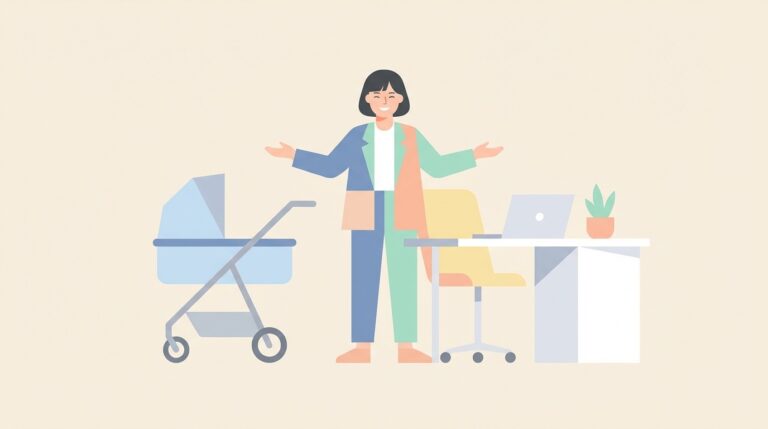
Phase 1: Empathy — Immersive Hook
Hello! Daily Hangul Editor here.
Picture this: A brilliant copywriter, once a rising star in the advertising world, is sitting in a job interview. She’s applying for a junior role she’s vastly overqualified for. The interviewer looks at her resume, sees a 7-year gap, and asks with a thinly veiled sigh, “So, who’s going to take care of your kid when you work late?”
If you’ve watched K-Dramas like Romance is a Bonus Book (로맨스는 별책부록) or Doctor Cha (닥터 차정숙), this scene is all too familiar. The subtitles might just say, “She took time off for her family,” but the socio-cultural weight behind this moment in Korea is massive.
Today, we are tackling a C2-level demographic and social issue: 여성 경력 단절 (Women’s career interruption) and the reality of returning to the workforce. Understanding the vocabulary around this topic isn’t just about passing the TOPIK II exam; it’s about reading the room in Korean corporate culture, understanding the structural challenges driving Korea’s low birth rate, and grasping the deep-seated gender dynamics hidden in everyday conversations.
This guide is crafted from real socio-linguistic shifts happening in Seoul right now. Let’s dive deep into the silent ceiling of the Korean workplace.
Phase 2: Deep Dive into Core Expressions
1. 경단녀 (Career-Interrupted Woman)
- Pronunciation: gyeong-dan-nyeo [Sounds like the chewy rice cake ‘Gyeong-dan’, but carries a much heavier social weight.]
- Meaning: (Literal) Career-severed woman. (Real nuance) A woman who had to leave the workforce, typically due to marriage, pregnancy, or childcare, and is now struggling to return.
- K-Culture Moment: You’ll hear this on Korean news constantly when discussing the plummeting birth rate. In a drama, a mother sipping coffee at a kids’ cafe might sigh and say, “나도 이제 완벽한 경단녀네” (I guess I’m a complete gyeong-dan-nyeo now).
- Editor’s Insight: This word is a portmanteau of 경력 (career) 단절 (interruption/severance) 여성 (woman). It has a somewhat self-deprecating or stigmatized nuance.
- Situation Spectrum:
[🚫 Never] ———— [⚠️ Caution] ———— [✅ Freely]
- Close friends (Self-referential): ✅
- News/Academic discussions: ✅
- Addressing someone directly at work: 🚫 (Never call someone a “경단녀” to their face; it’s considered highly insensitive).
- 🤔 Think About It: Why does Korean society have a specific abbreviation for this, but no equivalent term for men? What does the word “단절” (severance) imply about how society views a mother’s time spent raising a child?
2. 독박육아 (Solo-Parenting / Bearing the Childcare Burden Alone)
- Pronunciation: dok-bak-yu-ga [Dok-bak sounds like a hard tap on a drum!]
- Meaning: (Literal) Monopoly childcare. (Real nuance) Doing 100% of the parenting while the spouse works late or is unhelpful.
- K-Culture Moment: In a reality show like The Return of Superman (슈퍼맨이 돌아왔다), mothers often talk about escaping ‘dok-bak-yu-ga’ when the celebrity dads finally take over for 48 hours.
- Editor’s Insight: Dok-bak originally comes from a gambling term (Go-Stop/Hwatu) meaning “taking the entire penalty alone.” Applying a gambling penalty term to childcare perfectly encapsulates the sheer exhaustion Korean mothers feel due to long corporate working hours keeping fathers away from home.
- Situation Spectrum:
[🚫 Never] ———— [⚠️ Caution] ———— [✅ Freely]
- Venting to friends over drinks: ✅
- Professional/Formal settings: 🚫 (Too informal and colloquial).
- 🤔 Think About It: How does the prevalence of this word connect to the notorious Korean “칼퇴” (leaving work exactly on time) culture—or the lack thereof?
3. 눈치를 보다 / 눈칫밥을 먹다 (Walking on Eggshells / Eating ‘Nunchi’ Rice)
- Pronunciation: nun-chi-reul bo-da / nun-chit-bap-eul meok-da
- Meaning: (Literal) To look at one’s nunchi / To eat rice with nunchi. (Real nuance) Feeling hyper-aware of others’ negative judgments, especially when taking maternity leave (육아휴직) or leaving work on time to pick up a sick child.
- K-Culture Moment: An office worker’s child has a fever. She needs to leave at 4 PM. She slowly packs her bag, bowing apologetically to her boss, sweating profusely. She is “eating nunchi rice.”
- Editor’s Insight: Nunchi is the Korean superpower of reading the room. But when you are forced to use it because you feel guilty for exercising your legal rights (like parental leave), it becomes a heavy burden.
- Situation Spectrum:
[🚫 Never] ———— [⚠️ Caution] ———— [✅ Freely]
- Empathizing with a colleague: ✅
- Official HR meetings: ⚠️ (Better to use formal terms like “사내 분위기” – office atmosphere).
Phase 3: Textbook vs Real Life
| Situation | 📖 Textbook Korean | 🗣️ Real Korean | 💡 Why the difference? |
|---|---|---|---|
| Explaining a resume gap | 출산으로 인해 직장을 그만두었습니다. (I quit my job due to childbirth.) | 애 키우느라 경단녀 됐죠 뭐. (Raising kids made me a gyeong-dan-nyeo, what can you do.) | Real Korean uses self-deprecation to soften the social stigma and show conversational humility. |
| Asking for parental leave | 육아휴직을 신청하고자 합니다. (I would like to apply for parental leave.) | 팀장님, 저 육아휴직 쓰면 너무 눈치 보일까요? (Team leader, will I be judged too much if I use my parental leave?) | The legal right exists, but the hierarchical nunchi culture dictates the actual execution. |
| Describing an unhelpful spouse | 남편이 육아를 돕지 않습니다. (My husband does not help with childcare.) | 저 완전 독박육아잖아요. (I’m totally doing dok-bak-yu-ga.) | Slang derived from gambling expresses the visceral frustration of the situation better than formal words. |
Phase 4: Cultural Deep Dive
4-1. Non-verbal Communication: The Art of Apologetic Bowing
When Korean working mothers need to leave early due to a childcare emergency, the language is only 20% of the communication. The other 80% is physical: shoulders slightly hunched, avoiding prolonged eye contact with the manager, and giving multiple short, quick bows (반인사) while backing away. It visually communicates: “I know this inconveniences the team, and I am deeply sorry for prioritizing my family right now.”
4-2. K-Culture Connection: The K-Drama Mother’s Comeback
If you watch K-Dramas, you’ve witnessed the “Ahjumma Makeover” trope. A woman who sacrificed her 20s and 30s for her family is suddenly betrayed or widowed. She tries to get a job, is humiliated by young interviewers asking about her “lost years” (her 경력 단절 period), and eventually starts from the absolute bottom—often hiding her impressive past credentials just to get a foot in the door.
Critical Viewpoint: While dramas package this as a triumphant underdog story, the reality is starker. In real life, there is rarely a handsome, young CEO waiting to recognize her hidden genius. The systemic undervaluation of a mother’s organizational and management skills is a profound issue that Korea is only just beginning to reckon with.
Phase 5: Immersive Roleplay Scenario
Setting: A sleek, glass-walled meeting room in a tech startup in Pangyo (Korea’s Silicon Valley). It’s 2 PM.
Characters:
– YOU: An expat HR Director leading the interview panel. You are trying to build an inclusive workplace.
– Ji-yoon (38): A highly qualified candidate who took a 5-year break to raise her twins. She looks nervous but determined.
The Interview Dialogue:
You: 지원해 주셔서 감사합니다. 이력서가 아주 인상적이네요. 📄
(Ji-won-hae ju-syeo-seo gam-sa-ham-ni-da. I-ryeok-seo-ga a-ju in-sang-jeok-i-ne-yo.)
[Thank you for applying. Your resume is very impressive.]
Ji-yoon: 초대해 주셔서 감사합니다. ☺️
(Cho-dae-hae ju-syeo-seo gam-sa-ham-ni-da.)
[Thank you for inviting me.]
You: 예전 직장에서 마케팅 팀장으로 큰 성과를 내셨군요.
(Ye-jeon jik-jang-e-seo ma-ke-ting tim-jang-eu-ro keun seong-gwa-reul nae-syeot-gun-yo.)
[You achieved great results as a marketing team leader at your previous job.]
Ji-yoon: 네, 하지만 보시다시피 5년의 공백기가 있습니다.
(Ne, ha-ji-man bo-si-da-si-pi o-nyeon-ui gong-baek-gi-ga it-seum-ni-da.)
[Yes, but as you can see, I have a 5-year gap.]
You: 네, 확인했습니다. 그 기간 동안…
(Ne, hwa-gin-haet-seum-ni-da. Geu gi-gan dong-an…)
[Yes, I saw that. During that time…]
🔀 Your Turn! How do you address the gap?
– A) “아기가 어린데, 야근할 수 있겠어요?” (Your kids are young, can you work overtime?)
– B) “공백기 동안 마케팅 트렌드 변화를 어떻게 따라가셨나요?” (How did you keep up with marketing trends during your gap?)
– C) “독박육아 하시느라 고생 많으셨겠네요.” (You must have suffered a lot doing solo-parenting.)✅ Best Choice: B — This focuses on her professional capabilities.
⚠️ Choice A Analysis: Though historically common in Korea, asking about childcare logistics is increasingly viewed as discriminatory and a massive red flag for modern companies.
🚫 Choice C Analysis: “Dok-bak-yu-ga” is slang. Using it in a formal interview is highly unprofessional, even if you are trying to be empathetic.
(Assuming you chose B)
Ji-yoon: (Slightly relieved) 육아를 하면서도 프리랜서로 작은 프로젝트들을 진행하며 감을 잃지 않으려 노력했습니다.
(Yu-ga-reul ha-myeon-seo-do peu-ri-raen-seo-ro ja-geun peu-ro-jek-teu-deul-eul jin-haeng-ha-myeo gam-eul il-chi an-eu-ryeo no-ryeok-haet-seum-ni-da.)
[Even while raising kids, I tried not to lose my touch by taking on small projects as a freelancer.]
You: 훌륭하네요. 우리 회사는 유연근무제를 실시하고 있습니다.
(Hul-lyung-ha-ne-yo. U-ri hoe-sa-neun yu-yeon-geun-mu-je-reul sil-si-ha-go it-seum-ni-da.)
[That’s excellent. Our company implements a flexible working system.]
Ji-yoon: 아, 정말요? 눈치 보지 않고 일에 집중할 수 있겠네요!
(A, jeong-mal-yo? Nun-chi bo-ji an-ko ir-e jip-jung-hal su it-get-ne-yo!)
[Oh, really? I’ll be able to focus on work without walking on eggshells!]
You: 네, 지윤 씨의 능력을 마음껏 펼쳐주세요.
(Ne, Ji-yoon ssi-ui neung-ryeok-eul ma-eum-kkeot pyeol-chyeo-ju-se-yo.)
[Yes, please unleash your abilities to the fullest.]
Ji-yoon: 감사합니다. 기회를 주신다면 최선을 다하겠습니다!
(Gam-sa-ham-ni-da. Gi-hoe-reul ju-sin-da-myeon choe-seon-eul da-ha-get-seum-ni-da!)
[Thank you. If given the chance, I will do my absolute best!]
Phase 6: 10-Second Shadowing Drill
Speak as if you are a confident professional proving your worth in a tough interview room.
😤 저는 / 공백기 동안에도 / 트렌드를 놓치지 않기 위해 / 꾸준히 노력했습니다.
(jeo-neun / gong-baek-gi dong-an-e-do / teu-ren-deu-reul no-chi-ji an-gi wi-hae / kku-jun-hi no-ryeok-haet-seum-ni-da.)
[Even during my gap period, I consistently made an effort not to lose track of the trends.]
Intonation Tip: Put a strong, confident emphasis on 꾸준히 (kku-jun-hi / consistently) to show your unwavering work ethic.
Phase 7: K-Culture Mini Glossary
| Korean | Romanization | English | Contextual Explanation |
|---|---|---|---|
| 워킹맘 | wo-king-mam | Working Mom | A mother who is currently in the workforce. Often used in media to highlight the double burden of work and home. |
| 유리천장 | yu-ri-cheon-jang | Glass Ceiling | The invisible barrier preventing women from reaching executive levels, heavily tied to career breaks. |
| 육아휴직 | yu-ga-hyu-jik | Parental Leave | Legally guaranteed, but culturally tricky to use fully without corporate backlash in older companies. |
| 칼퇴 | kal-toe | Leaving exactly on time | (Literal: Knife-departure). Crucial for working moms to pick up kids from daycare, but often frowned upon in traditional offices. |
| 맞벌이 | mat-beol-i | Dual-income | A household where both partners work. It is the norm now, making the Gyeong-dan-nyeo issue an economic crisis, not just a social one. |
Phase 8: Traveler/Expat Survival Kit
Even if you aren’t interviewing for a job in Korea, as an expat or a traveler, you will be subjected to Korea’s highly personal conversation culture. Taxi drivers, local market vendors, or friendly grandmothers will ask you questions that touch upon these exact demographic pressures.
🆘 Survival Phrases: Handling Intrusive Questions
- 🇰🇷 “아직 계획이 없어요.” (a-jik gye-hoek-i eop-seo-yo.)
- 🗣️ Sound guide: [Ah-jik gyeh-hwek-ee op-so-yo]
- 📍 When to use: When a taxi driver asks “Are you married?” or “Do you have kids?”
- 💡 Pro Tip: Literally means “I don’t have plans yet.” It’s the polite, bulletproof Korean way to shut down questions about marriage, kids, or career moves without offending elders.
📌 Editor’s Note on Korean Small Talk:
In Western cultures, asking “Are you married?” or “Why aren’t you working?” to a stranger is incredibly rude. In older Korean culture, it’s considered an expression of 정 (Jeong – affection/interest). They aren’t trying to interrogate you; they are trying to find common ground. Smile, use the survival phrase, and smoothly change the subject to how delicious the local food is!
Phase 9: Think Deeper — “One Step Further”
🧠 Think Deeper: Language & Power (The Shift from 단절 to 보유)
For the past decade, the word 경력 단절 여성 (경단녀) brought vital visibility to the systemic pushout of mothers from the workforce. However, language shapes reality. The word “단절” (severance/cut-off) implies a defect or a loss of value.
Recently, Korean feminists, progressive companies, and younger generations have begun campaigning to replace this term with 경력 보유 여성 (Women with Retained Experience). This semantic shift is profound. It argues that raising a child, managing a household, and organizing a family’s logistics are not a “break” in experience, but a different kind of management experience that is actively retained.
By changing one word from 단절 (lost/severed) to 보유 (retained/possessed), society is attempting to rewrite the socio-economic value of motherhood.
💬 Your Turn: Does your native language have a specific term for women who take career breaks for family? Does it carry a stigma, or is it neutral? Share your thoughts in the comments!
Phase 10: Troubleshooting & FAQs
Q: “If I’m an employer in Korea, can I ask a female applicant about her marriage or pregnancy plans?”
A: NO. Legally, the Equal Employment Opportunity Act prohibits this. Culturally, while older “Kkondae” (꼰대 – boomer) managers might still do it, it is a massive PR disaster waiting to happen. It shows the company is severely out of touch.
Q: “My Korean female friend just quit her job after having a baby. Is it okay to say ‘Congratulations on becoming a full-time mom!’?”
A: MAYBE, but read the room. Many Korean women feel a deep sense of grief losing their professional identity. Instead of assuming she is thrilled, ask: “마음이 어때요? (How are you feeling about it?)” and validate her complex emotions.
❌ Common Mistake #1: Asking a female colleague who just returned from maternity leave, “애기는 누가 봐요?” (Who is looking after the baby?).
✅ Do this instead: Treat her return exactly as you would any other colleague returning from a long sabbatical. “다시 뵙게 되어 기뻐요!” (Great to see you back!).
Phase 11: Wrap-up & Action Items
One-Liner Summary: The term Gyeong-dan-nyeo encapsulates the structural struggles of Korean mothers balancing traditional family expectations with modern corporate demands.
Your Action Missions:
– 🥉 Bronze (Solo): Read the “Think Deeper” section out loud and practice the shadowing sentence with confidence.
– 🥈 Silver (Online): Go to a K-Drama forum or YouTube clip of Doctor Cha and leave a comment using the term “경단녀” to analyze the character’s struggle.
– 🥇 Gold (Real Life): If you work in Korea, consciously advocate for a “눈치-free” culture when your colleagues (male or female) need to use their family leave.
🎬 Special K-Culture Mission:
Watch Episode 1 of Romance is a Bonus Book on Netflix. Pay close attention to the interview scene. Can you spot the microaggressions the interviewers use to justify rejecting a mother returning to the workforce?
How is workplace culture changing in your country regarding parental leave? Let’s discuss below! 👇
Phase 12: Interactive Quiz
1. Situational Judgment:
You are grabbing coffee with your Korean friend, Min-ji, who recently left her tech job because she couldn’t find a reliable daycare. She sighs and says, “나도 어쩔 수 없는 경단녀인가 봐.” What is the most culturally empathetic response?
* A) “축하해! 이제 집에서 쉴 수 있잖아!” (Congratulations! Now you can rest at home!)
* B) “경력 단절이 아니라 경력 보유야. 넌 여전히 대단해.” (It’s not severed experience, it’s retained experience. You are still amazing.)
* C) “독박육아 파이팅!” (Good luck with solo-parenting!)
2. Fill in the Blank:
Korean corporate culture often makes people feel guilty for leaving exactly on time (칼퇴). This feeling of walking on eggshells is called “_____를 보다.”
3. True or False – K-Culture Edition:
In modern Korea, it is completely acceptable and common to ask a woman in a job interview who will take care of her children if she has to work overtime. (T / F)
Click here for Answers!
- B – A is insensitive to her loss of career identity. C is slightly colloquial and misses the core issue of her career grief. B uses the modern, empowering C2-level vocabulary we learned today!
- 눈치 (Nunchi)
- False – While it used to be a norm, it is now legally restricted and highly frowned upon by the younger generation and modern HR standards.
Frequently Asked Questions (FAQ)
Q: What does "경단녀 (Career-Interrupted Woman)" mean in Korean and how do you pronounce it?
A: In Korean, "경단녀 (Career-Interrupted Woman)" is pronounced [gyeong-dan-nyeo [Sounds like the chewy rice cake 'Gyeong-dan', but carries a much heavier social weight.] and means: (Literal) Career-severed woman. (Real nuance) A woman who had to leave the workforce, typically due to marriage, pregnancy, or childcare, and is now struggling to return.
Q: What does "독박육아 (Solo-Parenting / Bearing the Childcare Burden Alone)" mean in Korean and how do you pronounce it?
A: In Korean, "독박육아 (Solo-Parenting / Bearing the Childcare Burden Alone)" is pronounced [dok-bak-yu-ga [Dok-bak sounds like a hard tap on a drum!] and means: (Literal) Monopoly childcare. (Real nuance) Doing 100% of the parenting while the spouse works late or is unhelpful.
Q: What does "눈치를 보다 / 눈칫밥을 먹다 (Walking on Eggshells / Eating 'Nunchi' Rice)" mean in Korean and how do you pronounce it?
A: In Korean, "눈치를 보다 / 눈칫밥을 먹다 (Walking on Eggshells / Eating 'Nunchi' Rice)" is pronounced [nun-chi-reul bo-da / nun-chit-bap-eul meok-da] and means: (Literal) To look at one's nunchi / To eat rice with nunchi. (Real nuance) Feeling hyper-aware of others' negative judgments, especially when taking maternity leave (육아휴직) or leaving work on time to pick up a sick child.







