

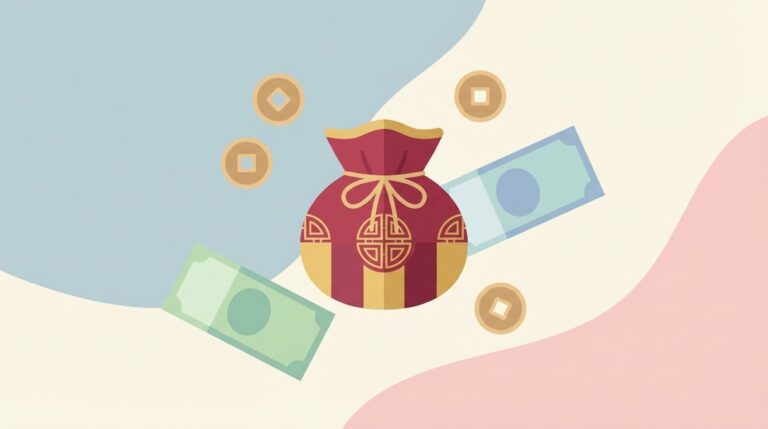
Phase 1: Immersive Hook — The “Envelope” Moment 🧧
Hello! This is your Senior Editor at Daily Hangul. 👋
Imagine this: You are watching a K-Drama like Reply 1988. The whole family gathers on New Year’s Day. The younger characters perform a deep, formal bow to the elders. Then, the magic happens. The grandmother smiles and hands them a beautiful, crisp white envelope (or sometimes a colorful silk pouch).
The characters’ eyes sparkle. ✨ Why? Because inside that envelope is Sebaetdon (세뱃돈)—New Year’s Cash!
If you ever spend Seollal (Lunar New Year) in Korea, or even if you just want to understand why your favorite K-Pop idols are bowing to the camera in January or February, you need to know this culture. It’s not just about money; it’s about respect, hierarchy, and affection.
Today, I’ll teach you how to survive this situation without awkwardness. Because trust me, simply saying “Thank you” might not be enough!
Phase 2: Deep Dive — Key Expressions 🧐
Here are the top 3 expressions you need for the Sebaetdon moment.
1. 새해 복 많이 받으세요 (Saehae bok mani badeuseyo)
- Pronunciation: [Sae-hae bok ma-ni ba-deu-se-yo]
- Sound Analogy: “Bok” sounds like “Poke” (without the forceful ‘p’).
- Meaning:
- Literal: Please receive a lot of New Year’s luck.
- Real Nuance: “Happy New Year!” (The standard greeting).
- K-Culture Moment: Every K-Pop idol says this in their New Year greeting videos. It’s the phrase that must be said before receiving any money.
- Editor’s Insight: You can’t just say this standing up. For Sebaetdon, you usually say this while doing the Sebae (deep bow).
- Situation Spectrum:
[🚫 To Younger] ———— [⚠️ Friends] ———— [✅ Everyone]- Note: It is safe to use with everyone, but strictly required for elders.
🤔 Think About It: In English, we say “Happy” New Year (an emotion). In Korean, we wish for “Bok” (Luck/Fortune). Why do you think Koreans focus on luck and concrete blessings rather than just happiness?
2. 세뱃돈 (Sebaetdon)
- Pronunciation: [Se-baet-don]
- Sound Analogy: “Don” sounds like the name “Dawn.”
- Meaning: New Year’s Bow Money.
- K-Culture Moment: In variety shows like Running Man, members often play games to win “Sebaetdon” from the older members.
- Editor’s Insight: This isn’t just “allowance.” It’s money given after the bow. If you don’t bow, you don’t get the cash! (Usually given to children and students).
3. 잘 쓰겠습니다 (Jal sseukessseumnida)
- Pronunciation: [Jal sseu-get-seum-ni-da]
- Meaning:
- Literal: I will use it well.
- Real Nuance: “I appreciate this and won’t waste it.”
- Editor’s Insight: Saying just “Thank you” (Gamsahamnida) is okay, but this phrase makes you sound like a super sensible person. Elders love hearing this.
Phase 3: Textbook vs. Real Life 📖 vs. 🗣️
| Situation | 📖 Textbook Korean | 🗣️ Real Korean (Daily Hangul Style) | 💡 Why different? |
|---|---|---|---|
| Receiving Money | 감사합니다. (Thank you.) | 우와! 대박! 감사합니다! (Wow! Daebak! Thank you!) | In close family settings, showing excitement makes the giver happy. |
| Refusing slightly | 아니요, 괜찮습니다. (No, it’s okay.) | 에이~ 삼촌, 안 주셔도 되는데… (Ay~ Uncle, you didn’t have to…) | Koreans practice Sae-sung (pretending to refuse once out of politeness). |
| Opening it | (Not mentioned) | (Never open it immediately!) | Opening gifts/money in front of the giver is considered rude in Korea. |
Bottom Note: For A1 beginners, stick to “Gamsahamnida” (Thank you) combined with a big smile. That is always safe!
Phase 4: Cultural Deep Dive — The Art of Receiving 🙇♂️
4-1. Non-verbal Communication: The “Two Hands” Rule
In Western culture, you might grab a bill with one hand. In Korea? Big mistake.
- Receive with TWO hands: Even if the envelope is light, treat it as if it weighs 10kg. Support your right arm with your left hand.
- The Bow (Sebae): Men put their left hand over their right; women put their right hand over their left. (Though for beginners, just overlapping hands politely is fine!)
- Don’t Peek: Do not look inside the envelope right away. Put it in your pocket or bag immediately. Checking the amount in front of the giver is like saying, “Is this all?”
4-2. K-Culture Connection: The “Rich Uncle” Trope
In K-Dramas like Hospital Playlist, you often see a “cool aunt/uncle” character who secretly slips extra money into the protagonist’s hand, whispering, “Don’t tell your mom.” This highlights a unique dynamic: Money = Affection. In Korea, giving cash isn’t seen as “impersonal”; it’s the most practical way to support someone’s dreams or education.
Phase 5: Immersive Roleplay 🎭
Setting: Seollal morning at your Korean friend Min-su’s house. You are wearing comfortable clothes. Min-su’s grandmother (Halmeoni) is sitting on a cushion.
Characters:
* YOU: A polite foreign guest.
* Halmeoni: Min-su’s kind but traditional grandmother.
(Dialogue Start)
YOU: (Doing a deep bow on the floor) 🙇
새해 복 많이 받으세요!
(Saehae bok mani badeuseyo!)
Halmeoni: (Smiling warmly) 그래, 우리 외국인 손님도 복 많이 받아라. 자, 여기 세뱃돈.
(Okay, our foreign guest receive much luck too. Here, take this Sebaetdon.)
(She holds out a white envelope)
🔀 Decision Point: What do you do?
- A) Grab it with one hand and say “Thanks!”
- B) Receive it with two hands and say “Gamsahamnida!”
- C) Open it and count the money.
✅ Best Choice: B
Reason: Using two hands shows respect. Saying polite honorifics is perfect.🚫 Avoid C: Never count money in front of the giver! It breaks the Nunchi (atmosphere).
(Dialogue Continue – You chose B)
YOU: (Taking it with two hands) 감사합니다! 잘 쓰겠습니다! 😊
(Gamsahamnida! Jal sseukessseumnida!)
Halmeoni: 그래, 맛있는 거 사 먹어.
(Yes, buy something delicious.)
Phase 6: 10-Second Shadowing Drill 🗣️
Practice this sentence to sound like a native!
Statement: “Grandmother, please receive a lot of New Year’s luck!”
- Korean: 할머니 / 새해 복 / 많~~~이 받으세요! 😊
- Romanization: Halmeoni / saehae bok / man~~~i badeuseyo!
- Guide:
Halmeoni(Pause slightly)Saehae bok(Stronger on ‘Bok’)Man~~~i(Stretch this out to sound cute and sincere!)Badeuseyo(End with a rising, bright tone)
Phase 7: K-Culture Glossary 📚
| Word | Romanization | Meaning | Context |
|---|---|---|---|
| 세배 | Sebae | New Year’s Bow | The deep formal bow done on the floor. |
| 덕담 | Deokdam | Words of blessing | Advice or good wishes elders give after receiving the bow (e.g., “Get married this year!” or “Study hard!”). |
| 복주머니 | Bokjumeoni | Fortune Pouch | A traditional silk bag often worn with Hanbok to carry the money. |
| 떡국 | Tteokguk | Rice Cake Soup | The soup you MUST eat on Seollal to turn one year older. |
Phase 8: Traveler’s Survival Kit 🧳
While Sebaetdon is a family event, money etiquette is crucial for travelers too!
🆘 Survival Expression #1: Paying for things
* 🇰🇷 “여기 있어요.” (Yeogi isseoyo.)
* Meaning: Here it is. (When handing over cash/card)
* 💡 Pro Tip: Even at a convenience store (CU, GS25), hand your credit card over with two hands (or support your elbow). The cashier will respect you instantly.📌 Editor’s Travel Note
* Tipping: Do NOT tip in Korea. Tipping culture does not exist. If you leave money on the table, the waiter will run after you thinking you lost it! Sebaetdon is a gift, not a tip.
Phase 9: Think Deeper — Money & Love 🧠
Topic: Is Cash the Best Gift?
In many Western cultures, giving cash can sometimes feel “lazy” or “impersonal.” You might prefer a thoughtful, wrapped gift. However, in Korea, cash (Sebaetdon) is considered the most honest and practical form of love. It says, “I want you to have the freedom to buy exactly what you need.”
It reflects the Korean value of Sil-li (Practicality) over formality in close relationships. Also, crisp, clean banknotes are prepared specifically for this, showing the giver went to the bank just for you.
💬 Your Turn: In your country, is giving cash rude or welcomed? Let me know in the comments!
Phase 10: FAQ & Troubleshooting 🛠️
Q: I am older than my Korean friend. Should I give them Sebaetdon?
* A: Not necessarily! Usually, it flows from Parents/Grandparents → Children/Students. If you are just friends of similar age, you don’t exchange money. You just eat Tteokguk (Rice cake soup) together.
Q: Do I have to wear a Hanbok (Traditional clothes) to bow?
* A: No! Nice, neat clothes are fine. But if you wear Hanbok, everyone will love it and you might get more money! 😉
❌ Common Mistake:
* Mistake: Bowing quickly like a nod.
* Fix: Sebae is a floor bow. You must kneel down all the way. A nod is just a greeting; it’s not a Sebae!
Phase 11: Wrap-up & Mission 🚀
One-Liner: Sebaetdon is not just cash; it’s a blessing exchanged for respect.
Action Missions:
* 🥉 Bronze: Look in the mirror and say “Saehae bok mani badeuseyo” with a smile.
* 🥈 Silver: Watch a YouTube video of “How to do Sebae (Korean Bow)” and try the posture.
* 🥇 Gold: If you visit a Korean restaurant this week, hand your credit card to the cashier with two hands.
K-Culture Mission:
* Search “Idol Seollal Greeting” on YouTube. Watch your favorite group bowing and see if you can hear “Saehae bok mani badeuseyo!”
Phase 12: Quiz — Interactive Challenge 🧩
- Situational Judgment: You received Sebaetdon from an elder. What is the RUDE thing to do?
- A) Say “Jal sseukessseumnida.”
- B) Receive it with two hands.
- C) Immediately open the envelope to check the amount.
- True or False:
- “In Korea, you should tip the waiter if the service was good, just like Sebaetdon.”
- (True / False)
- Fill in the Blank:
- “Happy New Year” in Korean is: “Saehae ___ mani badeuseyo!” (Hint: It means Luck)
(Scroll down for answers)
.
.
.
.
Answers:
1. C (Never check money in front of the giver!)
2. False (No tipping in Korea!)
3. Bok (복)
Frequently Asked Questions (FAQ)
Q: What does "새해 복 많이 받으세요 (Saehae bok mani badeuseyo)" mean in Korean and how do you pronounce it?
A: In Korean, "새해 복 많이 받으세요 (Saehae bok mani badeuseyo)" is pronounced [Sae-hae bok ma-ni ba-deu-se-yo] and means: a key conversational Korean expression covered in this lesson.
Q: What does "세뱃돈 (Sebaetdon)" mean in Korean and how do you pronounce it?
A: In Korean, "세뱃돈 (Sebaetdon)" is pronounced [Se-baet-don] and means: a key conversational Korean expression covered in this lesson.
Q: What does "잘 쓰겠습니다 (Jal sseukessseumnida)" mean in Korean and how do you pronounce it?
A: In Korean, "잘 쓰겠습니다 (Jal sseukessseumnida)" is pronounced [Jal sseu-get-seum-ni-da] and means: Literal: I will use it well.







