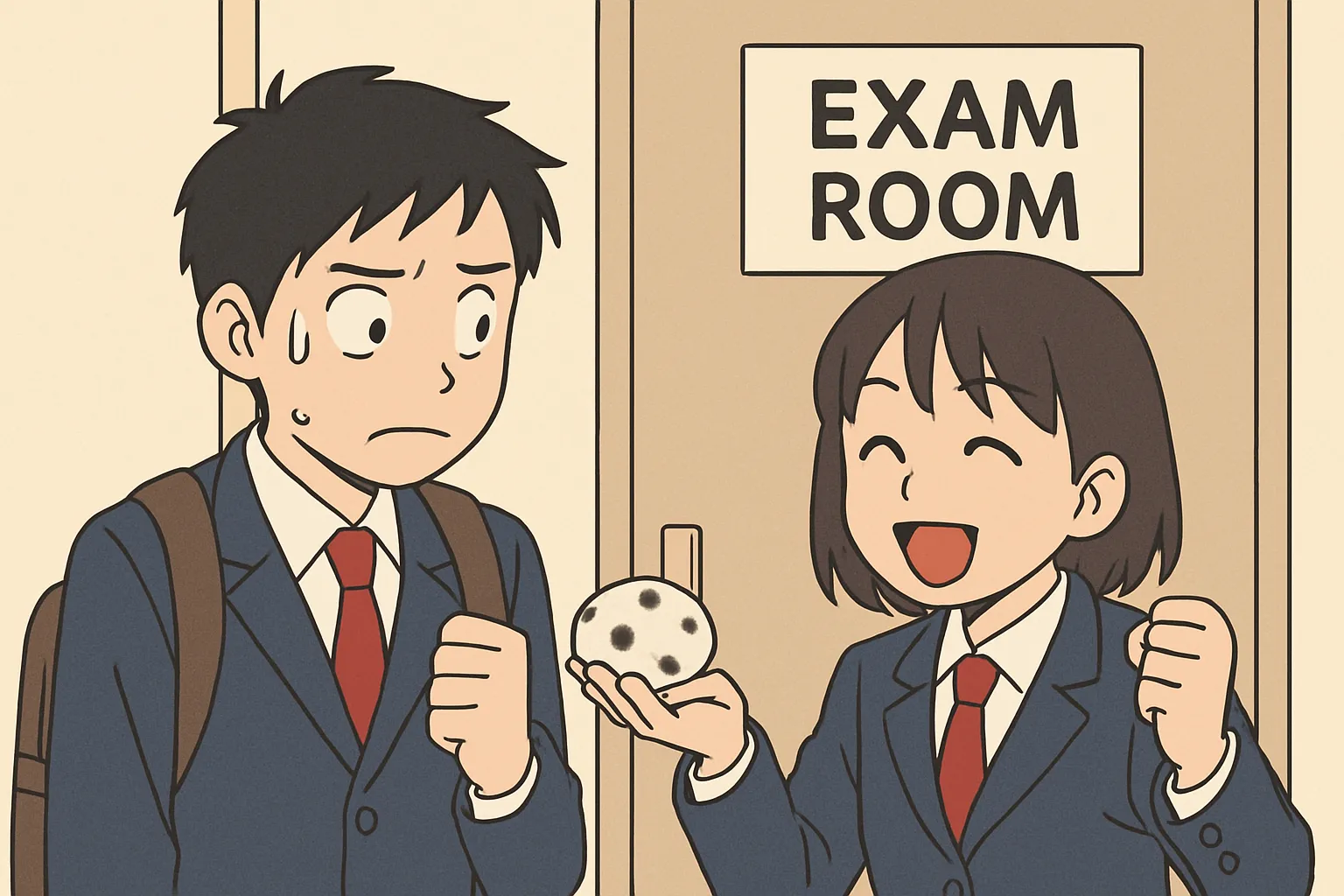

Panic in the Classroom? How to Handle “읽어 보세요” Like a Pro
Phase 1: Introduction
안녕하세요! Hello! This is your editor at Daily Hangul.
Picture this: You are sitting in your very first Korean class. You’re nervous, clutching your textbook. Suddenly, the teacher makes eye contact with you, smiles, points to the whiteboard, and says, “이거 읽어 보세요 (I-geo il-geo bo-se-yo).”
Your heart stops. Did she ask me to write a poem? Did she ask me to dance?
Don’t panic! This is the most common phrase you will hear in any language classroom. Today, we are going to master the phrase “읽어 보세요” (Please read this) and a few survival phrases so you never have to freeze up in class again.
This guide is based on real questions from students who were terrified of being called on but are now chatting away confidently!
Phase 2: Deep Dive into Core Expressions
Here are the top 3 phrases you need to survive the “Reading Time.”
1. 읽어 보세요 (Please read)
- Pronunciation: [Il-geo bo-se-yo]
- Sound Analogy: Eel (the fish) + Go (let’s go!) + Bo (bow and arrow) + Se (say) + Yo (yo-yo).
- Note: The bottom consonant
ㄹis silent here, and theㄱmoves over to the next block. So it sounds like 일거 (Il-geo), not Ik-eo.- Meaning: Try reading (it).
- Editor’s Insight: This isn’t a demand like “READ NOW!” It’s a polite suggestion or instruction. The verb 보다 (to see/try) softens the command. The teacher is saying, “Give reading a try.”
- Situation Check: Used by teachers to students, or doctors asking you to read an eye chart. Formal and polite.
2. 몇 쪽이에요? (What page is it?)
- Pronunciation: [Myeot jjog-i-e-yo?]
- Sound Analogy: M-yuh + Jok (like ‘joke’ without the ‘e’) + E + Eh + Yo.
- Meaning: Which page is it?
- Editor’s Insight: The lifesaver phrase! If you zoned out for a second and everyone is looking at their books, use this. Don’t worry about being polite; getting to the right page is more important!
- Situation Check: Casual enough for classmates, polite enough for the teacher.
3. 잘 모르겠어요 (I don’t understand / I don’t know)
- Pronunciation: [Jal mo-reu-ge-sseo-yo]
- Meaning: I don’t know well.
- Editor’s Insight: In Western culture, we often say “I have a question.” In Korea, it is very humble and acceptable to admit “I don’t know well.” It signals the teacher to help you immediately.
- Situation Check: Perfect for A1 beginners. Use it whenever you are stuck.
Phase 3: Textbook vs. Real Life
Textbooks can be a bit stiff. Here is how people actually talk in a casual class setting.
| Textbook (Standard) | Real Life (Classroom Vibes) |
|---|---|
| 책을 펴세요. (Open your book.) | 책 좀 봐 주세요. (Please look at the book.) |
| 다시 말씀해 주세요. (Please say it again.) | 한 번만 더요. (One more time, please.) |
| 질문 있습니까? (Do you have questions?) | 이해 돼요? (Does this make sense?) |
- Bottom Note: As a beginner (A1), sticking to the Textbook column is safer, but understanding the Real Life column helps you catch what the teacher is actually muttering!
Phase 4: Cultural Context & Manners
The Art of “Eye Contact”
When the teacher says “읽어 보세요,” they are testing your confidence, not just your reading skills.
- Don’t hide: In some cultures, looking down means respect. In a Korean language class, looking down when asked to read might make the teacher think you are ignoring them or unprepared. Look at the text, then briefly glance at the teacher to show you are ready.
- Two Hands Rule: If the teacher hands you a piece of paper to read, always receive it with two hands. Even if it’s just a small handout. It’s a “magic trick” that makes every Korean smile and think, “Wow, this person has manners!”
Phase 5: Roleplay Scenario
Setting: A beginner Korean classroom in Seoul. It’s the first week.
Characters: Teacher (Minji) and Student (Alex).
(Teacher points to a sentence on the screen)
Teacher: 알렉스 씨, 이거 읽어 보세요. (Alex, please read this.)
[Alex ssi, i-geo il-geo bo-se-yo.]
(Alex looks confused and scratches his head)
Alex: 죄송해요. 잘 모르겠어요. (Sorry. I don’t know it well.)
[Joe-song-hae-yo. Jal mo-reu-ge-sseo-yo.]
(Teacher smiles and points to the book instead)
Teacher: 괜찮아요. 그럼 책 10쪽 보세요. (It’s okay. Then please look at page 10.)
[Gwaen-chan-a-yo. Geu-reom chaek sip-jjok bo-se-yo.]
Alex: 아! 네, 알겠습니다. (Ah! Yes, I understand.)
[Ah! Ne, al-ge-sseum-ni-da.]
Phase 6: 10-Second Shadowing
Let’s practice the sentence you will hear most often. Pay attention to the linking sound!
“Please try reading this sentence.”
이 문장 / 읽어 보세요.
[I mun-jang / il-geo bo-se-yo]
- Tip: Don’t pause between il and geo. Connect them smoothly: Ilgeo.
Phase 7: FAQ & Troubleshooting
Q: Can I say “No” (아니요) if I don’t want to read?
A: Avoid a direct “No.” In a Korean classroom, a direct “No” can feel a bit aggressive or dismissive to the teacher’s authority. Instead, use the phrase we learned: “아직 잘 못해요” (I can’t do it well yet) or “다음에 할게요” (I’ll do it next time). It saves face for everyone!
Q: Is “읽으세요” (Read!) rude?
A: It is grammatically correct but sounds very demanding, like a strict order. Teachers prefer “읽어 보세요” (Try reading) because it sounds softer and more encouraging.
Phase 8: Wrap-up
- Summary: When you hear “읽어 보세요,” don’t freeze—just try to read! If you get stuck, say “잘 모르겠어요.”
- Mission: Next time you are studying alone, point to a sentence and whisper “읽어 보세요” to yourself, then read it aloud. Be your own teacher!
- Tell me: What is the hardest Korean word you have tried to read so far? Let me know in the comments!
Phase 9: Pop Quiz
1. What does “읽어 보세요” mean?
A) Please write this.
B) Please read this / Try reading.
C) Please listen.
2. If you don’t know which page to open, what do you ask?
A) 몇 시예요? (What time is it?)
B) 얼마예요? (How much is it?)
C) 몇 쪽이에요? (What page is it?)
3. True or False:
It is rude to say “I don’t know well” (잘 모르겠어요) to a teacher.
(True / False)
Click to see answers
1. B
2. C
3. False (It is humble and good to admit it!)