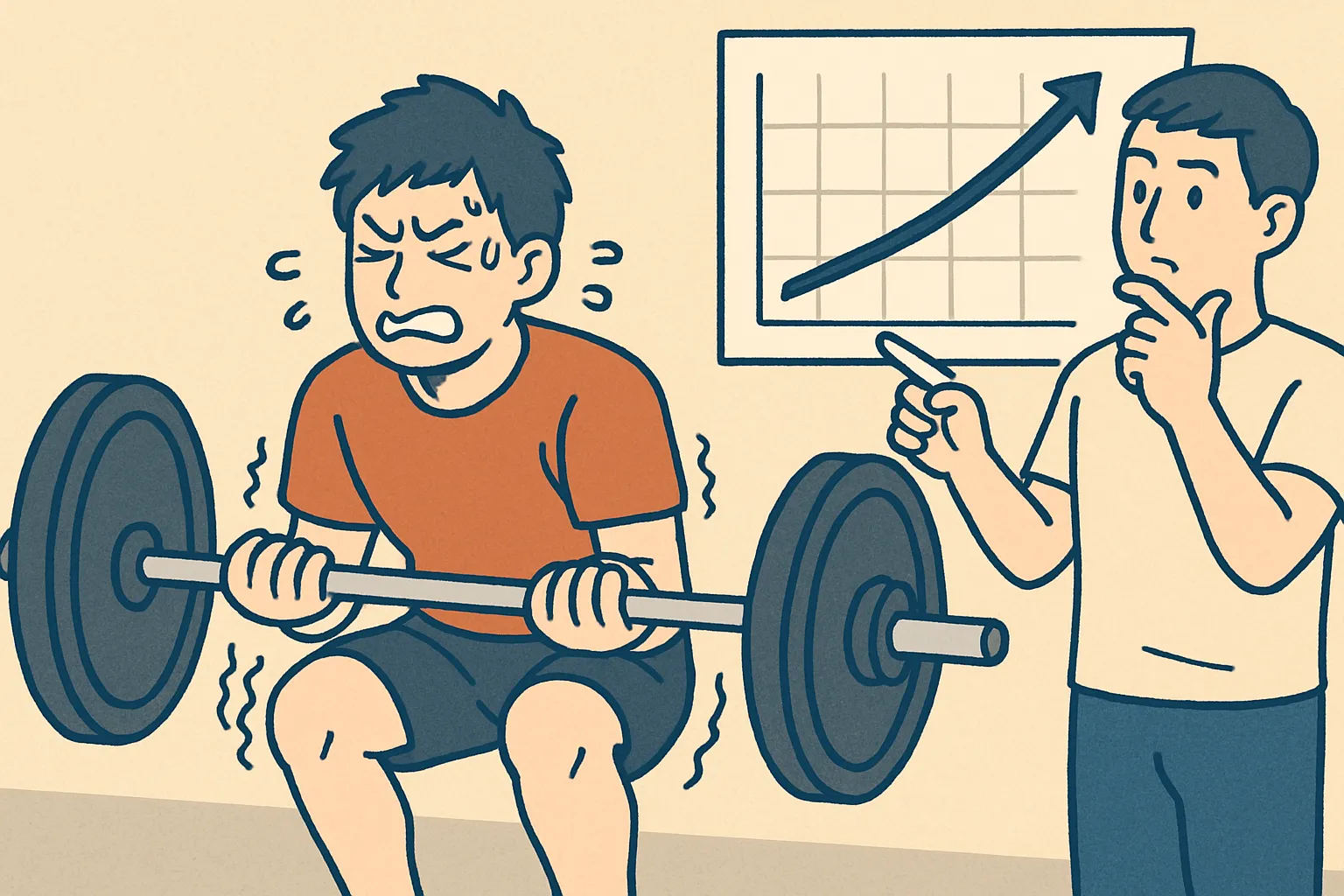

Korean for Professionals: Debating Corporate Wellness
Hello! Welcome back to [Daily Hangul], your go-to source for leveling up your Korean skills!
Today, we’re diving into a topic you’ll definitely encounter in a modern Korean workplace or in sophisticated conversations: corporate wellness. Lately in Korea, the conversation around “워라밸” (work-life balance) has exploded. Companies are now competing to offer the best wellness programs to attract top talent. But are they always effective?
This lesson will equip you with the advanced vocabulary and expressions needed to discuss the pros and cons of these programs, so you can share your nuanced opinions just like a native speaker. Let’s get started!
Core Expressions for Your Debate
Here are some key phrases that will elevate your discussion from simple statements to insightful arguments.
1. 긍정적인 영향을 미치다 (geungjeongjeogin yeonghyang-eul michida)
- English Meaning: To have a positive effect/influence.
- Detailed Explanation: This is a formal and articulate way to say something is good for something else.
긍정적means “positive,”영향means “influence” or “effect,” and미치다is the verb “to exert” or “to have.” It’s perfect for business reports, presentations, or formal discussions about the impact of a policy or program. - 💡 Pronunciation Tip:
Notice the word영향을. In Korean, when a syllable ending in a consonant is followed by a syllable starting with a vowel, the consonant sound “moves over” or links to the next syllable. So, instead of pronouncing it asyeong-hyang / eul, it flows smoothly as [yeonghyang-eul]. This is called 연음 (yeon-eum) or liaison, and mastering it will make you sound much more natural!
2. 양날의 검 (yangnal-ui geom)
- English Meaning: A double-edged sword.
- Detailed Explanation: This is a fantastic idiom to use when you want to express that something has both significant pros and cons.
양날means “both edges” and검means “sword.” It implies that a solution or situation, while beneficial in one way, could also cause problems. Using idioms like this shows a high level of fluency. - 💡 Pronunciation Tip:
The particle의 (ui)can be tricky! Officially, it’s [ui]. However, in conversation:- When used as a possessive marker (like here: “sword of two edges”), it’s often pronounced as [e]. So,
양날의sounds like [yangnar-e]. - When it’s not the first syllable of a word, it can also be pronounced as [i]. For example,
주의 (ju-ui)often sounds like [ju-i].
- When used as a possessive marker (like here: “sword of two edges”), it’s often pronounced as [e]. So,
3. ~다는 전제 하에 (~daneun jeonje ha-e)
- English Meaning: On the premise that… / Assuming that…
- Detailed Explanation: This is a C1-level grammar pattern used to set a condition for your statement. It’s incredibly useful for adding nuance to your argument. You attach it to a verb or adjective stem to say that your point is only valid if a certain condition is met.
- Verb:
참여한다는 전제 하에(on the premise that they participate) - Adjective:
자유롭다는 전제 하에(on the premise that it is free/unrestricted)
- Verb:
- 💡 Pronunciation Tip:
The two vowels in하에 (ha-e)are pronounced smoothly together, almost like a single syllable [hae], rather than a distincthafollowed bye. Think of it as gliding from one vowel to the next without a pause.
Example Dialogue
Let’s see how these expressions work in a real conversation between two colleagues, Subin and Minjun.
A: 수빈 (Subin)
우리 회사에서 새로 도입한 웰니스 프로그램 말이에요. 직원들의 정신 건강에 긍정적인 영향을 미칠 것 같아요.
(About the new wellness program our company introduced… I think it will have a positive effect on employees’ mental health.)
B: 민준 (Minjun)
저도 동의해요. 하지만 그건 양날의 검이라고 생각해요. 직원들이 실제로 그걸 이용할 시간이 있다는 전제 하에 효과가 있는 거니까요.
(I agree. However, I think it’s a double-edged sword. It’s only effective on the premise that employees actually have the time to use it.)
A: 수빈 (Subin)
아, 그것도 일리 있네요. 단순히 프로그램을 제공하는 것만이 능사는 아니겠어요.
(Ah, that’s a valid point. Simply providing the program isn’t the ultimate solution, is it?)
B: 민준 (Minjun)
네, 맞아요. 야근 문화가 그대로면 아무 소용이 없겠죠.
(Yes, exactly. If the culture of working overtime remains, it would be useless.)
Culture Tip & Trend Deep Dive
In Korea, the term “워라밸” (Worabel), a portmanteau of “Work-Life Balance,” is more than just a buzzword; it’s a cultural shift. The older generation often accepted 야근 (overtime work) and a company-first mentality as normal. However, the MZ Generation (Millennials + Gen Z) is actively pushing back.
This is why corporate wellness programs have become a major talking point. When top tech companies like “네카라쿠배” (an acronym for Naver, Kakao, Line, Coupang, Baemin – the most desirable tech workplaces) compete, they don’t just advertise salary. They showcase in-house cafeterias, fitness centers, and mental health counseling services.
So, when you use a phrase like ~다는 전제 하에, you’re tapping directly into this modern Korean debate. You’re showing that you understand the surface-level benefit (the program) and the deeper structural issue (the actual time to use it), which is a very sophisticated cultural and linguistic understanding!
Wrap-up & Practice
Great job today! You’ve learned how to discuss a complex topic with nuance and sophistication. You can now:
* Talk about positive effects with 긍정적인 영향을 미치다.
* Point out pros and cons using the idiom 양날의 검.
* Set conditions for your argument with ~다는 전제 하에.
Now, let’s put it into practice!
- Fill in the blank:
Working from home can be a ___________; you have more freedom, but it can be lonely.
(재택근무는 ___________일 수 있어요. 자유롭지만 외로울 수도 있으니까요.) -
Sentence Making:
Using긍정적인 영향을 미치다, how would you say “Regular exercise has a positive effect on health”?
Leave your answers in the comments below! We’d love to see you use these new expressions. Keep up the fantastic work