
Hello! This is Maeil Hangeul, here to upgrade your Korean skills!
Have you ever felt tired from the hustle and bustle of daily life? Today, we’re going to learn some wonderful Korean expressions to talk about the small hobbies and activities that bring us joy and help us recharge.
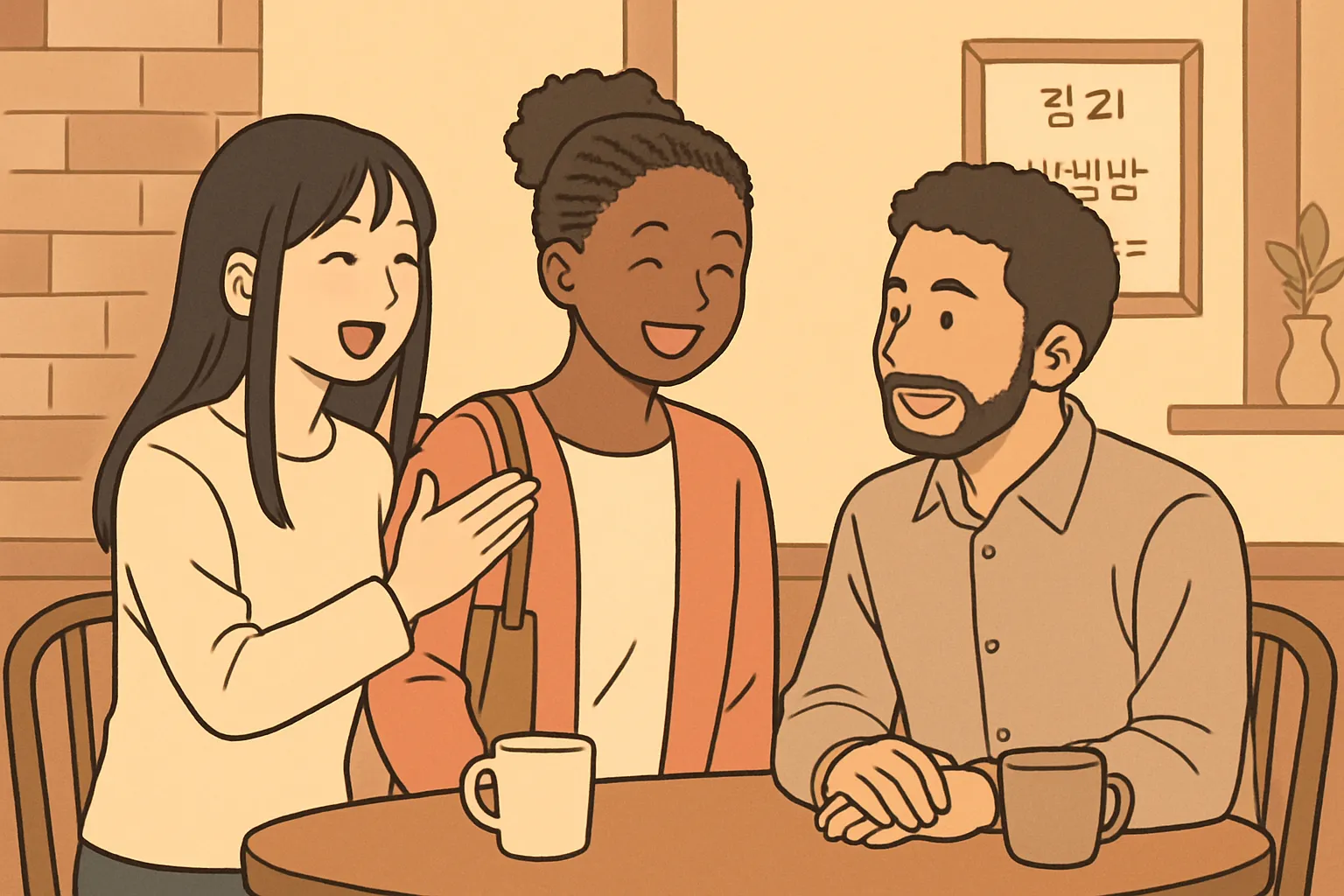
Lately in Korea, there’s a huge trend called “So-hwak-haeng” (소확행), which means finding “small but certain happiness.” Instead of chasing big, distant goals, many people are focusing on enjoying the little moments. Let’s learn how to talk about these moments in Korean!
Core Expressions
Here are three essential phrases to talk about your happy hobbies.
1. 소확행 (So-hwak-haeng)
- Pronunciation [Romanization]: So-hwak-haeng
- English Meaning: Small but certain happiness
- Detailed Explanation: This is a very trendy term in Korea! It’s an acronym for 소소하지만 확실한 행복 (so-so-ha-ji-man hwak-sil-han haeng-bok). It refers to the simple, everyday activities that reliably bring you joy, like drinking your favorite coffee in the morning or listening to a good song on your way home. It’s a casual word you’ll hear a lot among friends and see all over social media.
- 💡 Pronunciation Tip:
- This word is made of three distinct syllables: 소(so) + 확(hwak) + 행(haeng). The ‘o’ in ‘소’ is a pure ‘o’ sound, like in “go.” The ‘ae’ in ‘확’ and ‘행’ is like the ‘a’ in “apple.” Pay attention to the final ‘k’ sound in ‘확’—it’s a soft, unreleased stop.
2. 힐링돼요 (Hilling-dwaeyo)
- Pronunciation [Romanization]: Hilling-dwaeyo
- English Meaning: It’s healing / I feel healed.
- Detailed Explanation: This is a perfect example of “Konglish” (Korean-style English)! It combines the English word “healing” with the Korean verb 되다 (dwaeda), which means “to become.” You can use this phrase whenever an activity feels relaxing, therapeutic, or relieves your stress. Watching a calm video, taking a warm bath, or walking in nature are all things that can make you say, “아, 힐링돼요.”
- 💡 Pronunciation Tip:
- The pronunciation is [힐링돼요 / hilling-dwaeyo]. Be careful with the ‘돼(dwae)’ sound. It’s a combination of ‘ㄷ(d)’ + ‘ㅗ(o)’ + ‘ㅐ(ae)’ and is pronounced quickly as one syllable, like “dway.”
3. 스트레스가 풀려요 (Seuteureseuga pullyeoyo)
- Pronunciation [Romanization]: Seuteureseuga pullyeoyo
- English Meaning: My stress is relieved.
- Detailed Explanation: This is the most common and natural way to say you’re de-stressing. The verb 풀리다 (pullida) literally means “to be untied” or “to be resolved.” So, you’re saying your stress is literally “coming undone.” It’s a fantastic expression to use after doing something you enjoy, like exercising or singing karaoke.
- 💡 Pronunciation Tip:
- The key here is the pronunciation of 풀려요 [풀려요 / pul-lyeo-yo]. The ‘ㄹ’ at the end of ‘풀’ and the ‘ㄹ’ at the beginning of ‘려’ blend together to make a smooth ‘l’ sound. Try saying “pul-lyeo-yo” instead of “pul-reo-yo” for a more natural flow.
Example Dialogue
Let’s see how these phrases are used in a real conversation!
A: 주말에 뭐 했어요? (Jumare mwo haesseoyo?)
What did you do over the weekend?
B: 요즘 인기 있는 드라마 ‘선재 업고 튀어’ 봤어요. 맛있는 과자 먹으면서 드라마 보는 게 제 소확행이에요.
(Yojeum ingi inneun deurama ‘Seonjae eopgo twieo’ bwasseoyo. Masinneun gwaja meogeumyeonseo deurama boneun ge je sohwakhaeng-ieyo.)
I watched the popular K-drama ‘Lovely Runner’. Watching dramas while eating tasty snacks is my small but certain happiness.
A: 와, 좋네요! 저도 그럴 때 정말 힐링돼요.
(Wa, jonneyo! Jeodo geureol ttae jeongmal hilling-dwaeyo.)
Wow, that sounds nice! I also feel so healed when I do that.
B: 맞아요. 일주일 동안 쌓였던 스트레스가 풀려요.
(Majayo. Iljuil dongan ssayeotdeon seuteureseuga pullyeoyo.)
Exactly. The stress from the whole week is relieved.
Culture Tip & Trend Deep Dive
The “So-hwak-haeng” trend is more than just a buzzword; it’s a cultural shift. In Korea’s fast-paced society, the pressure to achieve big successes can be overwhelming. “So-hwak-haeng” is a response to that, encouraging people, especially the younger MZ generation, to find and appreciate happiness in their immediate surroundings.
What counts as “so-hwak-haeng”?
* 다꾸 (Dakku): Decorating your diary or planner with cute stickers and tapes.
* 카페 투어 (Kape tueo): “Cafe tour,” visiting aesthetically pleasing cafes for coffee and dessert.
* 퇴근 후 맥주 한 잔 (Toegeun hu maekju han jan): Having a single can of beer after work.
This mindset is closely related to another important concept: 워라밸 (Worabel), the Korean term for “Work-Life Balance.” By finding your own “so-hwak-haeng,” you’re actively practicing good “worabel”! If you use these terms, your Korean friends will be impressed by how up-to-date you are with the culture.
Wrap-up & Practice!
Today, we learned some heartwarming Korean expressions to talk about what makes us happy.
* 소확행 (So-hwak-haeng): Small but certain happiness
* 힐링돼요 (Hilling-dwaeyo): It’s healing
* 스트레스가 풀려요 (Seuteureseuga pullyeoyo): My stress is relieved
Now it’s your turn to practice!
Practice Quiz:
Fill in the blank with the most suitable expression from today’s lesson.
- A: 노래방에서 신나게 노래를 부르니까 기분이 너무 좋아요!
(Noraebang-eseo sinnage noraereul bureunikka gibuni neomu joayo!)
I feel so good singing my heart out at karaoke!B: 맞아요! 저도 노래를 부르면 __________.
(Majayo! Jeodo noraereul bureumyeon __________.)
Right! When I sing, my __________.
What is your “so-hwak-haeng”? Share it with us in the comments using the expressions you learned today! We’d love to hear from you