
Live Your Best ‘God-saeng’ Life! Korean Phrases for Your Goals
Hello! This is Maeil Hangeul, here to upgrade your Korean skills!
Have you ever needed the perfect words to cheer on a friend who’s working hard? Or maybe you needed to give yourself a little motivational boost? Today, we’re going to learn some essential Korean phrases for giving and receiving encouragement.
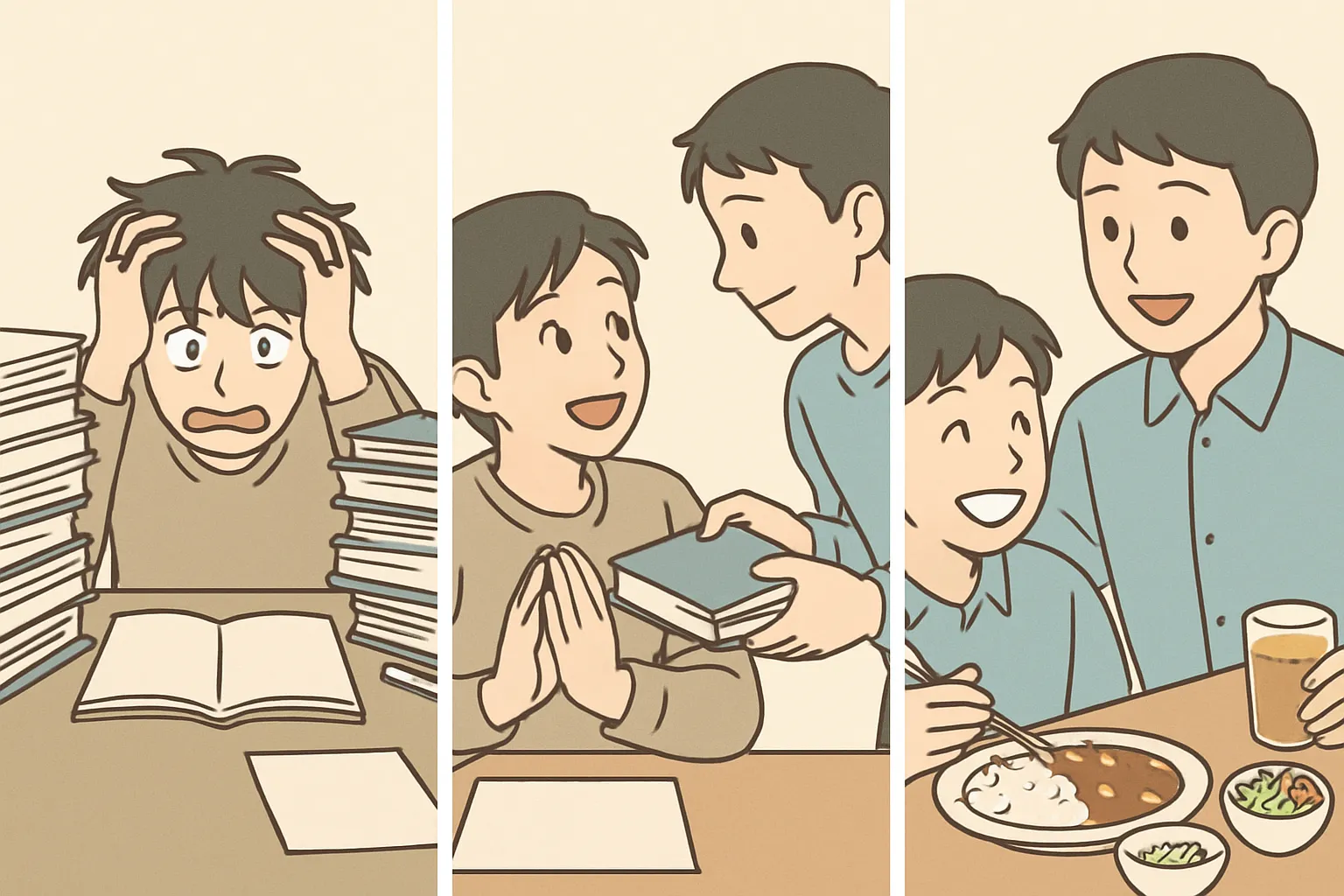
Lately in Korea, there’s a huge trend among young people called “God-saeng” (갓생). It’s a combination of the English word “God” and the Korean word “Saeng” (생), meaning ‘life’. It refers to living a productive, admirable, and goal-oriented life—waking up early, exercising, studying hard, and achieving your goals. As you and your friends work on your own “God-saeng” challenges, these phrases will be your best cheerleaders!
Let’s dive in!
Core Expressions for Your “God-saeng” Journey
Here are four key phrases to help you and your friends stay motivated.
1. 할 수 있어! (Hal su isseo!)
- Pronunciation [Romanized]: Hal su isseo!
- English Meaning: You can do it!
- Detailed Explanation: This is the most classic and powerful phrase of encouragement in Korean. It’s an informal and friendly way to tell someone you believe in them. You use it with close friends or people younger than you. For a more polite version (for older people or in formal situations), you can say 할 수 있어요! (Hal su isseoyo!).
- 💡 Pronunciation Tip:
- Notice the final consonants in 할 (hal) and 수 (su). They are clear and distinct. But in 있어 (isseo), something interesting happens! The ‘ㅆ’ (ss) sound at the bottom of 있 moves over to the next syllable, which starts with a vowel ‘어’. So, instead of pronouncing it like “it-eo,” it flows smoothly into [이써/isseo]. This is called liaison (연음) and it makes Korean sound much more natural.
2. 거의 다 왔어. (Geoui da wasseo.)
- Pronunciation [Romanized]: Geoui da wasseo.
- English Meaning: You’re almost there. / You’ve almost made it.
- Detailed Explanation: This phrase is perfect for when someone is in the final stretch of a difficult task. 거의 (geoui) means ‘almost’, 다 (da) means ‘all’ or ‘completely’, and 왔어 (wasseo) means ‘came’ or ‘arrived’. Literally, it’s like saying, “You’ve almost arrived at the end.” It’s incredibly motivating when you feel like giving up right before the finish line.
- 💡 Pronunciation Tip:
- The double consonant ‘ㅆ’ (ss) in 왔어 (wasseo) is a “tense” sound. To make this sound, make your tongue tense and produce a short, strong ‘s’ sound, like the ‘s’ in “hiss.” It’s stronger than the single ‘ㅅ’ (s) sound.
3. 포기하지 마. (Pogihaji ma.)
- Pronunciation [Romanized]: Pogihaji ma.
- English Meaning: Don’t give up.
- Detailed Explanation: This is a direct and heartfelt plea for someone to keep going. It’s made from the verb 포기하다 (pogihada), meaning ‘to give up’, and the negative command grammar -지 마 (-ji ma). It’s a very common phrase you’ll hear in K-dramas when a character is facing a huge challenge! The polite form is 포기하지 마세요 (Pogihaji maseyo).
- 💡 Pronunciation Tip:
- The first sound ‘ㅍ’ (p) in 포기 (pogi) is an “aspirated” sound. This means you should release a strong puff of air when you say it. Try holding a piece of paper in front of your mouth. When you say “포 (po),” the paper should flutter! It’s different from the softer ‘ㅂ’ (b) sound.
4. 응원할게! (Eungwonhalge!)
- Pronunciation [Romanized]: Eungwonhalge!
- English Meaning: I’ll be cheering for you! / I’ll root for you!
- Detailed Explanation: This is a warm and supportive phrase that shows you’re on someone’s side. 응원하다 (eungwonhada) means ‘to cheer’ or ‘to support’. The ending -(으)ㄹ게 (-lge) is used to express the speaker’s intention or promise to the listener. It feels very personal and sincere.
- 💡 Pronunciation Tip:
- The final sound in 할게 (halge) often sounds more like [할께/halkke]. This is a common sound change rule called tensing (된소리되기). When a consonant like ‘ㄱ’ (g) comes after a final consonant like ‘ㄹ’ (l), it often becomes a tense sound ‘ㄲ’ (kk). Don’t worry too much about the rule name, just try to listen for and mimic this stronger sound!
Example Dialogue
Let’s see how these phrases work in a real “God-saeng” conversation!
A: 요즘 한국어능력시험(TOPIK) 때문에 너무 힘들어… 이번에는 꼭 합격해야 하는데.
(Y즘 han-gugeo-neung-ryeok-siheom ttaemune neomu himdeureo… Ibeoneneun kkok hapgyeokaeya haneunde.)
Lately, studying for the TOPIK exam is so hard… I really have to pass this time.
B: 포기하지 마! 너 정말 열심히 했잖아. 거의 다 왔어.
(Pogihaji ma! Neo jeongmal yeolsimhi haetjana. Geoui da wasseo.)
Don’t give up! You’ve studied so hard. You’re almost there.
A: 정말 그렇게 생각해?
(Jeongmal geureoke saenggakae?)
Do you really think so?
B: 당연하지! 할 수 있어! 내가 항상 응원할게!
(Dangyeonhaji! Hal su isseo! Naega hangsang eungwonhalge!)
Of course! You can do it! I’ll always be cheering for you!
Culture Tip: Inside the “God-saeng” (갓생) Trend
The “God-saeng” trend is more than just a hashtag; it’s a lifestyle movement for Korean millennials and Gen Z. It’s a reaction against the feeling of burnout and uncertainty. Instead of chasing one huge, distant dream, people focus on small, daily achievements that make them feel accomplished.
- On Social Media: You’ll see thousands of posts on Instagram with hashtags like #갓생챌린지 (God-saeng Challenge) or #오운완 (short for 오늘 운동 완료, ‘Today’s workout complete’). People share pictures of their study notes, healthy meals, or early morning alarms (this is called 미라클 모닝, ‘Miracle Morning’).
- How to use our phrases: When your Korean friend posts a picture of their early morning study session for their “God-saeng” challenge, you can be the best friend ever by commenting: “와, 멋있다! 응원할게!” (Wow, that’s cool! I’ll be cheering for you!). They will definitely appreciate your support!
Let’s Practice!
Time to check what you’ve learned.
- Fill in the blank: Your friend is about to go into a big job interview. You want to give them confidence. What do you say?
“걱정 마! 너는 잘할 거야. _______!” (Don’t worry! You’ll do great. _______!)
- Make a sentence: How would you encourage a friend who is training for their first 5km race and says they want to quit? Try using 포기하지 마 and 거의 다 왔어.
Great job today! You’re now equipped with the best phrases to be a super supportive friend and to motivate yourself on your own Korean learning journey.
What’s your “God-saeng” goal? Share it in the comments below using one of the phrases we learned today! 응원할게요! (I’ll be cheering for you!)