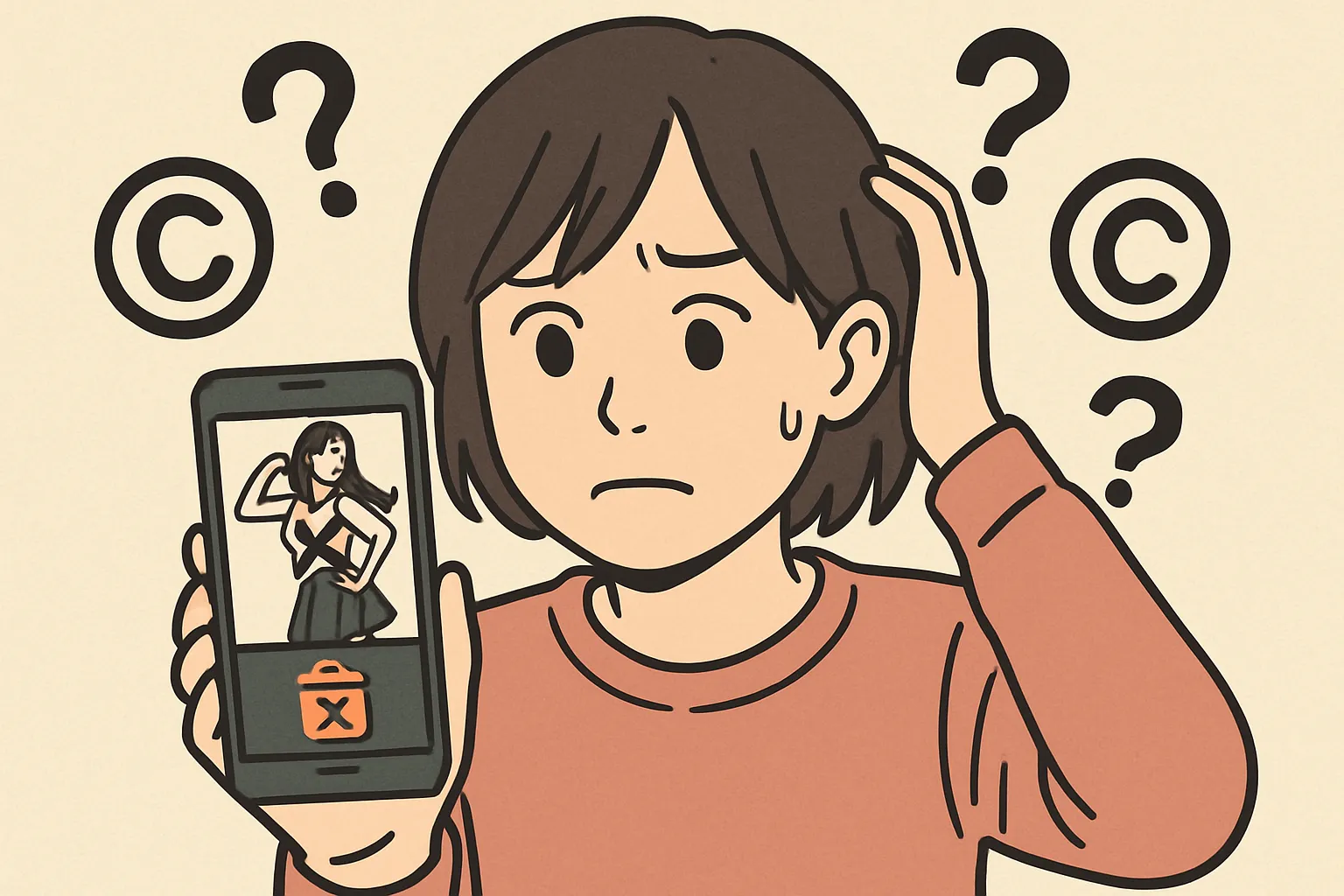

Beyond ‘짝퉁’: A Deep Dive into Korean IP Lingo
Hello! Welcome back to [Maeil Hangeul], your go-to source for leveling up your Korean!
Today, we’re moving beyond everyday conversation and into the professional and legal world to discuss a topic that’s more relevant than ever: Intellectual Property. With the global explosion of K-pop, K-dramas, and K-fashion, the market for related goods is huge. But with popularity comes a downside: counterfeit products. You’ve probably learned the word ‘짝퉁’ (jjak-tung) for “fake,” but to discuss this issue with the nuance it deserves, you need a more sophisticated vocabulary.
Lately in Korea, there’s been a lot of news about cracking down on fake K-pop merchandise and imitation designer goods seen in popular dramas. Today, you’ll learn the exact terms used in these discussions, allowing you to understand the news, engage in serious conversations, and protect yourself as a consumer. Let’s get started!
Core Expressions You Need to Master
Here are the essential terms to discuss intellectual property and counterfeits like a pro.
1. 모조품 (Mojo-pum)
- Pronunciation [Romanization]: Mo-jo-pum
- English Meaning: Counterfeit good / Imitation product
- Detailed Explanation: While ‘짝퉁’ (jjak-tung) is a common slang term, 모조품 (模造品) is the more formal and technical term you’ll see in news articles, legal documents, and official announcements. It’s derived from Hanja characters: 模 (imitate), 造 (make), and 品 (product). Using this word instead of ‘짝퉁’ in a formal or professional setting will instantly make you sound more advanced and knowledgeable.
-
💡 Pronunciation Tip: The ‘ㅍ (p)’ in 품 (pum) is an aspirated consonant. This means you need to release a strong puff of air when you say it, similar to the ‘p’ in the English word “park.” It’s a much stronger sound than the unaspirated ‘ㅂ (b/p)’ you hear in a word like ‘밥’ (bap). Practice saying “pum” with a piece of paper in front of your mouth—it should flutter!
2. 상표권 침해 (Sangpyo-gwon chimhae)
- Pronunciation [Romanization]: Sang-pyo-gwon chim-hae
- English Meaning: Trademark infringement
-
Detailed Explanation: This is a crucial legal term. Let’s break it down: 상표 (sangpyo) means ‘trademark,’ 권 (gwon) means ‘right(s),’ and 침해 (chimhae) means ‘infringement’ or ‘violation.’ So, literally, “trademark rights infringement.” This is the precise legal wrongdoing committed when someone sells a 모조품 of a branded product. You will frequently encounter this term in news reports about legal battles between companies.
-
💡 Pronunciation Tip: The key here is the smooth flow between syllables. In 상표권 (sangpyo-gwon), pronounce each part distinctly without pausing. For 침해 (chimhae), the ‘ㅎ (h)’ sound is very soft and breathy. It almost blends with the preceding syllable, so it sounds less like “chim-HAE” and more like a smooth “chim-hae.”
3. 정품 인증 (Jeongpum injeung)
- Pronunciation [Romanization]: Jeong-pum in-jeung
- English Meaning: Authentic product verification
-
Detailed Explanation: This is an incredibly practical and modern term. 정품 (jeongpum) means ‘genuine/authentic product,’ and 인증 (injeung) means ‘certification’ or ‘verification.’ It refers to any method used to prove a product is real. Many Korean cosmetic, fashion, and electronics brands now include a QR code, hologram sticker, or a unique serial number on their packaging for 정품 인증.
-
💡 Pronunciation Tip: Nasal sounds are key here. The ‘ㅇ (ng)’ at the end of 정 (jeong) and 증 (jeung) is a nasal consonant made at the back of your throat. A common point of confusion is the difference between ‘ㄴ (n)’ and ‘ㅇ (ng)’. For 인 (in), the tip of your tongue touches the ridge behind your top teeth. For 증 (jeung), the back of your tongue presses against your soft palate. Practice the difference: 안 (an) vs. 앙 (ang).
4. 지식재산권 (Jisik-jaesan-gwon)
- Pronunciation [Romanization]: Ji-sik-jae-san-gwon
- English Meaning: Intellectual Property Rights (IPR)
-
Detailed Explanation: This is the high-level, all-encompassing term. It breaks down into 지식 (jisik) for ‘knowledge,’ 재산 (jaesan) for ‘property,’ and 권 (gwon) for ‘right(s).’ It’s the umbrella concept that includes trademarks (상표권), copyrights (저작권), and patents (특허권). You may also see the synonym 지적재산권 (jijeok-jaesan-gwon), which means the same thing.
-
💡 Pronunciation Tip: The double ‘ㅅ’ sound can be tricky. In 지식재산권, the ‘ㅅ’ in 식 (sik) is followed by the ‘ㅈ’ in 재 (jae). Because ‘식’ ends in a consonant, you pronounce them distinctly: [jisik-jaesan-gwon]. Don’t try to blend them. Focus on giving each syllable a clear, crisp pronunciation to master the rhythm of this long, professional term.
Example Dialogue
Let’s see how these words are used in a real conversation.
A: 와, 새로 나온 아이돌 ‘서울 스트라이더즈’ 응원봉이에요? 진짜 예쁘네요!
(Wa, saero naon aidol ‘Seoul Striders’ eungwonbong-ieyo? Jinjja yeppeuneyo!)
(Wow, is that the new light stick for the idol group ‘Seoul Striders’? It’s so pretty!)
B: 저도 그렇게 생각했는데, 아무래도 모조품인 것 같아요. 비공식 온라인 쇼핑몰에서 샀거든요.
(Jeodo geureoke saenggakhaenneunde, amuraedo mojo-pum-in geot gatayo. Bigongsik onlain syopingmol-eseo satgeodeunyo.)
(I thought so too, but I think it might be a counterfeit. I bought it from an unofficial online shop.)
A: 상자 옆에 정품 인증 QR 코드 있는지 확인해 봐요. 그런 식으로 가짜를 파는 건 명백한 상표권 침해 행위예요.
(Sangja yeope jeongpum injeung QR kodeu inneunji hwaginhae bwayo. Geureon sig-euro gajja-reul paneun geon myeongbaekan sangpyo-gwon chimhae haengwi-yeyo.)
(Check if there’s an authentic product verification QR code on the side of the box. Selling fakes like that is a clear act of trademark infringement.)
B: 맞아요. 아티스트의 창작물은 소중한 지식재산권으로 보호받아야 하니까요. 지금 바로 확인해 봐야겠어요.
(Majayo. Atiseuteu-ui changjangmul-eun sojunghan jisik-jaesan-gwon-euro boho-badaya hanikkayo. Jigeum baro hwaginhae bwayagesseoyo.)
(That’s right. An artist’s creative work should be protected by valuable intellectual property rights. I’ll check it right now.)
Culture Tip & Trend Analysis
In Korea, the battle against 모조품 is a hot topic, especially as K-culture’s influence grows.
- The “K-Premium” Problem: The high demand for Korean products abroad has led to sophisticated counterfeit operations. News channels frequently report on police busting warehouses full of fake K-beauty products or imitation K-pop albums. These reports will always use the terms 모조품 and 상표권 침해.
- Tech-Savvy Verification: To fight back, Korean companies are leaders in implementing 정품 인증 technology. When you buy a popular Korean cosmetic product, don’t be surprised to find a scannable tag that leads you to a verification website. Knowing this term is practical for any savvy shopper!
- Fandom & Authenticity: For dedicated K-pop fans, buying official goods is a direct line of support for their favorite artists. Therefore, the distinction between a 정품 and a 모조품 is extremely important. On fan cafes and social media, you’ll see advanced discussions about how to spot fakes, making this vocabulary essential for deeper engagement with the fan community. Understanding the concept of 지식재산권 helps you understand why this is so important to them.
Wrap-up & Practice!
Great job! You’ve just learned four advanced and incredibly useful terms to discuss the complex world of intellectual property in Korean. You’ve moved beyond simple slang and can now articulate the issue with precision and formality.
Now, let’s test your knowledge!
- Fill in the Blank: A company discovered that another business was using its exact logo without permission. This is a serious case of ____________.
(Answer: 상표권 침해) -
Scenario Question: You’re explaining to a friend why buying official merchandise is important. Which overarching legal concept would you mention to emphasize the protection of an artist’s creative work?
(Answer: 지식재산권)
Now it’s your turn! Have you ever seen a counterfeit product? Try to describe the situation in the comments using today’s vocabulary. We can’t wait to see you use your new skills