
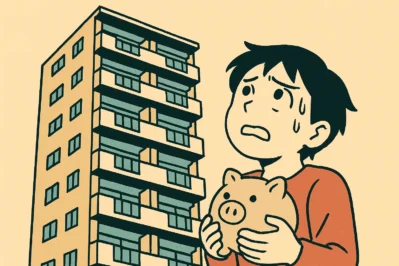
Unpacking Korea’s Housing Crisis: From Jeonse to Yeongkkeul
Introduction
Hello! This is [Maeil Hangul], here to upgrade your Korean skills to the next level!
Today, we are diving into a topic that is essential for understanding contemporary Korean society: Area Studies: East Asia, specifically focusing on real estate issues in major cities and housing insecurity among the youth.
If you watch the news or talk to Korean friends in their 20s and 30s, you cannot miss this topic. In Seoul, the conversation often revolves around the skyrocketing housing prices and the struggle to find a stable home. Recently, terms like “Jeonse Fraud” and “Yeongkkeul” have dominated the headlines, reflecting the intense pressure young people face.
As advanced learners, being able to discuss these social phenomena will not only improve your vocabulary but also give you deep insight into the Korean mindset. Let’s explore these sophisticated expressions together!
Key Expressions
Here are 4 key expressions to help you discuss real estate and social issues like a local expert.
1. 영끌하다 (Yeongkkeul-hada)
- Pronunciation: [Yeong-kkeul-ha-da]
- English Meaning: To scrape together every penny (even one’s soul) to buy a house; to max out all possible loans.
- Detailed Explanation: This is a portmanteau of ‘영혼’ (soul) and ‘끌어모으다’ (to gather/collect). It metaphorically means “gathering even your soul” to afford a down payment. It highlights the desperation of the younger generation trying to buy a home before prices rise further, often taking on excessive debt.
- 💡 Pronunciation Tip:
- Pay attention to ‘끌’ (kkeul). It is a tensed sound (ssang-giyeok). It’s not a soft ‘g’ or an aspirated ‘k’, but a sharp, high-pitched sound produced by tensing your throat.
- Also, when ‘영’ (ng) meets ‘끌’ (kk), there is no sound change, but ensure the ‘ng’ in the batchim (final consonant) is fully resonant before starting the sharp ‘kk’.
2. 전세 사기 (Jeonse sagi)
- Pronunciation: [Jeon-se sa-gi]
- English Meaning: Jeonse fraud / Charter rent scam.
- Detailed Explanation: ‘Jeonse’ is Korea’s unique housing rental system where a large lump-sum deposit is paid instead of monthly rent. Recently, ‘Jeonse sagi’ (fraud) has become a major social issue where landlords fail to return this massive deposit, leaving tenants—often young people—bankrupt. This is a crucial term in current affairs.
3. 상대적 박탈감 (Sangdaejeok baktalgam)
- Pronunciation: [Sang-dae-jeok bak-tal-gam]
- English Meaning: Relative deprivation.
- Detailed Explanation: This is a C2-level academic and social term. It refers to the feeling of being deprived or left behind when comparing oneself to others. In the context of real estate, people feel ‘sangdaejeok baktalgam’ when they see housing prices soar while their income remains stagnant, making them feel like they can never catch up.
- 💡 Pronunciation Tip:
- Let’s look at ‘박탈’. It is written as ‘bak-tal’ but pronounced [bak-tal] (or sometimes tensified to [bak-ttal] depending on emphasis, though standard is close to the written form with a stop).
- However, the key rule here is Resyllabification in the phrase ‘상대적 박탈감’. The ‘적’ (jeok) ends with a ‘k’ sound. When you pause, it’s fine, but if spoken quickly, the ‘k’ stop makes the following ‘b’ sound slightly stronger.
- More importantly, let’s look at a related phrase often used: ‘집만’ (Only the house). It is written ‘Jip-man’ but pronounced [Jim-man]. This is Nasal Assimilation. The obstruent ‘ㅂ’ (p/b) changes to the nasal ‘ㅁ’ (m) because it is followed by the nasal ‘ㅁ’. So, don’t say “Jip-man”, say [Jim-man].
4. 내 집 마련 (Nae jim maryeon)
- Pronunciation: [Nae jim ma-ryeon]
- English Meaning: Buying one’s own home / Homeownership.
- Detailed Explanation: ‘마련’ means preparation or arrangement. This phrase specifically refers to the milestone of purchasing one’s first home. It is the ultimate goal for many, but increasingly difficult to achieve.
- 💡 Pronunciation Tip:
- Here is the Nasal Assimilation rule in action again!
- Written: 내 집 마련 (Nae jip maryeon)
- Pronunciation: [Nae jim maryeon]
- Why? The final consonant ‘ㅂ’ (p) in ‘집’ meets the ‘ㅁ’ (m) in ‘마련’. The ‘p’ sound softens into an ‘m’ sound for smoother flow. Pronouncing it as “Nae jip maryeon” sounds robotic. [Nae jim maryeon] sounds like a native speaker!
Example Dialogue
Let’s see how these expressions are used in a serious conversation between two friends, Min-su and Ji-eun.
Min-su: Did you see the news about the new apartment complex in Gangnam? The competition rate was insane.
(강남 새 아파트 청약 경쟁률 뉴스 봤어? 장난 아니더라.)
Ji-eun: I know. Honestly, watching that gives me such a sense of relative deprivation (상대적 박탈감). Even if I work for 10 years, I don’t think I can achieve homeownership (내 집 마련).
(알아. 솔직히 그런 거 보면 **상대적 박탈감만 들어. 10년을 일해도 내 집 마련은 못 할 것 같아.)**
Min-su: That’s why so many people did Yeongkkeul (영끌) a few years ago to buy houses. But now, with high interest rates, they are suffering.
(그래서 몇 년 전에 사람들이 집 사려고 다들 **영끌했잖아. 근데 지금은 금리가 높아서 고생하더라고.)**
Ji-eun: Exactly. And for those who didn’t buy, they are terrified of Jeonse fraud (전세 사기). It really is a difficult time for our generation.
(맞아. 그리고 집 안 산 사람들은 **전세 사기 때문에 무서워하고. 진짜 우리 세대한테는 힘든 시기야.)**
Culture Tip & Trend Deep Dive
🏠 Why is “Jeonse” becoming a risk?
In the past, Jeonse (전세) was considered a stepping stone to owning a house. You deposit a large sum (50-80% of the house value), live rent-free for two years, and get the full money back. It was a way to save money by avoiding monthly rent.
However, the recent trend in Korea is a shift towards Wolse (Monthly Rent). Why? Because of the “Jeonse Fraud” crisis. Unscrupulous landlords bought hundreds of villas using tenants’ deposits (Gap Investment) and then defaulted when housing prices dropped, leaving tenants penniless.
Because of this, the younger generation (MZ Generation) is now facing a dilemma:
1. Risk their life savings on Jeonse.
2. Pay expensive Wolse (Monthly Rent) and save less money.
3. Attempt Yeongkkeul (taking huge loans) to buy a house, despite high interest rates.
This structural issue is the core of the “Housing Insecurity” (주거 불안) currently dominating Korean society. When you discuss this topic, showing empathy towards this structural difficulty will make you sound very sophisticated and culturally aware.
Conclusion & Practice
Today, we explored the complex world of Korean real estate and the struggles of the youth. We learned about Yeongkkeul (영끌), the fear of Jeonse fraud (전세 사기), and the resulting relative deprivation (상대적 박탈감). These are heavy topics, but essential for engaging in high-level discussions about East Asian society.
📝 Mini Quiz:
Fill in the blank with the correct expression we learned today!
“Interest rates are too high right now. It is dangerous to ___________ to buy a house.”
(요즘 금리가 너무 높아요. 집을 사려고 ___________ 하는 건 위험해요.)
Hint: It means to pull together your soul and max out loans!
If you know the answer, please leave a comment below! Also, tell us about the housing situation in your country. Is it similar to Korea?
See you in the next post, and happy studying!