
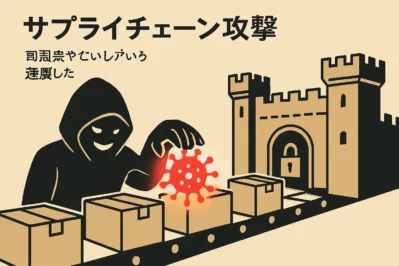
Decoding Korea’s Cyber Frontline: Mastering ‘Supply Chain Attacks’
Hello! Welcome back to [Maeil Hangeul], your key to unlocking advanced, real-world Korean!
Ready to move beyond everyday conversations and dive into the language of Korean newsrooms and boardrooms? Today, we’re tackling a critical and highly relevant topic: Cybersecurity, specifically focusing on the sophisticated threat of Supply Chain Attacks (공급망 공격).
Why this topic? Nowadays in Korea, a global IT powerhouse, discussions about cybersecurity aren’t just for tech experts. Following recent high-profile incidents targeting major corporations, terms like ‘supply chain attack’ are frequently appearing in news headlines and business strategy meetings. Understanding this vocabulary will not only elevate your Korean proficiency to an expert level but also give you insight into the pressing challenges facing modern Korean society. Let’s get started!
Core Expressions You Need to Know
Here are the essential terms to discuss this complex topic like a pro.
1. 공급망 공격 (Gong-geum-mang Gong-gyeok)
- Pronunciation [Romanization]: Gong-geum-mang Gong-gyeok
- English Meaning: Supply Chain Attack
- Detailed Explanation: This is a direct and formal term. 공급망 (gong-geum-mang) means ‘supply chain,’ and 공격 (gong-gyeok) means ‘attack.’ It refers to a cyberattack strategy where malicious actors infiltrate a company by targeting less secure elements in its supply network, such as software vendors or third-party service providers. This is a highly specialized term used in professional contexts like IT security, government reports, and journalism.
- 💡 Pronunciation Tip: The key here is the tensed consonant ‘ㄲ’ in ‘공격’. It’s not a soft ‘g’ sound like in ‘go’. Tense the back of your tongue and release the sound without aspiration. Think of it as a stronger, tighter version of ‘ㄱ’. This tensed sound is crucial for sounding clear and professional.
2. 취약점 (Chwi-yak-jeom)
- Pronunciation [Romanization]: Chwi-yak-jeom
- English Meaning: Vulnerability / Weakness
- Detailed Explanation: This term is composed of 취약 (chwiyak), meaning ‘vulnerable’ or ‘weak,’ and 점 (jeom), meaning ‘point.’ A 취약점 is a flaw or weakness in a system’s security that can be exploited. It’s a fundamental concept in any cybersecurity discourse and is used formally in technical analyses and reports.
- 💡 Pronunciation Tip: The initial sound ‘취’ [chwi] can be tricky. It’s a diphthong combining ‘ㅊ’ (ch) + ‘ㅜ’ (u) + ‘ㅣ’ (i). To pronounce it correctly, start by forming your lips to say ‘ㅜ’ (u) and then quickly transition to ‘ㅣ’ (i), all while releasing the aspirated ‘ㅊ’ (ch) sound from the front of your mouth. Practice saying it smoothly: Chwi!
3. 방어 전략을 수립하다 (Bang-eo Jeol-lyak-eul Su-rip-ha-da)
- Pronunciation [Romanization]: Bang-eo Jeol-lyak-eul Su-rip-ha-da
- English Meaning: To establish a defense strategy
- Detailed Explanation: This is a formal, high-level phrase perfect for business or policy discussions. Let’s break it down: 방어 (bang-eo) is ‘defense,’ 전략 (jeol-lyak) is ‘strategy,’ and 수립하다 (suriphada) is a formal verb meaning ‘to establish’ or ‘to formulate.’ You would use this phrase when discussing proactive measures to counter cyber threats.
- 💡 Pronunciation Tip: Notice the liaison (연음) rule in ‘전략을’. The final consonant ‘ㄱ’ (k) from ‘전략’ moves over to the next syllable, which starts with a vowel. Therefore, it’s not pronounced jeol-lyak-eul but rather smoothly as [절랴글, jeol-lya-geul]. Mastering this will make your Korean sound incredibly fluid and natural.
4. 잠재적 위협 (Jam-jae-jeok Wi-hyeop)
- Pronunciation [Romanization]: Jam-jae-jeok Wi-hyeop
- English Meaning: Potential Threat
- Detailed Explanation: This term is used to describe risks that have not yet materialized but require monitoring and preparation. 잠재적 (jamjaejeok) means ‘potential’ or ‘latent,’ and 위협 (wihyeop) means ‘threat.’ It’s a standard term in risk management, security analysis, and strategic planning.
- 💡 Pronunciation Tip: The ‘ㅎ’ (h) in ‘위협’ [wi-hyeop] should be clearly aspirated. Unlike the often silent ‘h’ in English, the Korean ‘ㅎ’ requires a distinct puff of air. Practice by holding your hand in front of your mouth; you should feel the breath when you say hyeop.
Example Dialogue: In the Security Team’s Office
Let’s see how these expressions are used in a realistic conversation between two security professionals.
- A: 김 대리님, 이번 K-테크 해킹 사건에 대한 분석 보고서 보셨어요? 전형적인 공급망 공격이라고 하네요.
(Kim Daeri-nim, have you seen the analysis report on the recent K-Tech hacking incident? They’re saying it was a classic supply chain attack.)- Gim Daeri-nim, ibeon K-tekeu haeking sageon-e daehan bunseok bogoseo bosyeosseoyo? Jeonhyeongjeogin gong-geum-mang gong-gyeog-irago haneyo.
- B: 네, 봤습니다. 협력업체 관리 시스템의 치명적인 취약점을 파고들었다고 합니다. 우리 회사의 모든 잠재적 위협을 다시 점검하고, 더 강력한 방어 전략을 수립해야 할 것 같습니다.
(Yes, I have. Apparently, they exploited a critical vulnerability in a partner company’s management system. It seems we need to re-evaluate all potential threats to our company and establish a stronger defense strategy.)- Ne, bwasseumnida. Hyeomnyeok-eopche gwalli siseutem-ui chimyeongjeogin chwi-yak-jeom-eul pagodeureotdago hamnida. Uri hoesa-ui modeun jamjaejeok wi-hyeob-eul dasi jeomgeomhago, deo gangnyeokan bang-eo jeol-lyag-eul suriphaeya hal geot gatseumnida.
Culture Tip & Trend Deep Dive
In Korea, cybersecurity is a matter of national importance. Because the country is hyper-connected and home to global tech giants, it’s a prime target for sophisticated cyberattacks. News reports frequently mention the involvement of state-sponsored hacker groups, making cybersecurity a recurring theme in geopolitical discussions.
When you see headlines like “정부, 공급망 공격 대비 사이버 안보 강화” (Government to Strengthen Cyber Security in Preparation for Supply Chain Attacks), you’ll now understand the gravity of the situation.
Using the advanced, Sino-Korean based vocabulary we learned today (like 취약점 and 수립하다) in these contexts demonstrates a deep, professional understanding of the language. It shows you can engage in the same high-level discourse as Korean experts, far beyond casual conversation. This is how you prove your C2-level mastery!
Let’s Review & Practice!
Great job today! We’ve covered some very advanced and practical vocabulary related to cybersecurity. You learned:
* 공급망 공격 (Supply Chain Attack)
* 취약점 (Vulnerability)
* 방어 전략을 수립하다 (To establish a defense strategy)
* 잠재적 위협 (Potential Threat)
Now, let’s put your knowledge to the test!
- Fill in the Blank:
해커들은 시스템의 ___________을(를) 이용하여 내부 네트워크에 침투했다.
(Hackers infiltrated the internal network by using the system’s ___________.) -
Sentence Building Challenge:
Imagine you are a CEO. Using the phrase “잠재적 위협에 대비하다” (to prepare for potential threats), write one sentence about your company’s top priority for next year.
Don’t be shy! Share your answers in the comments below. I can’t wait to see you use these powerful new expressions