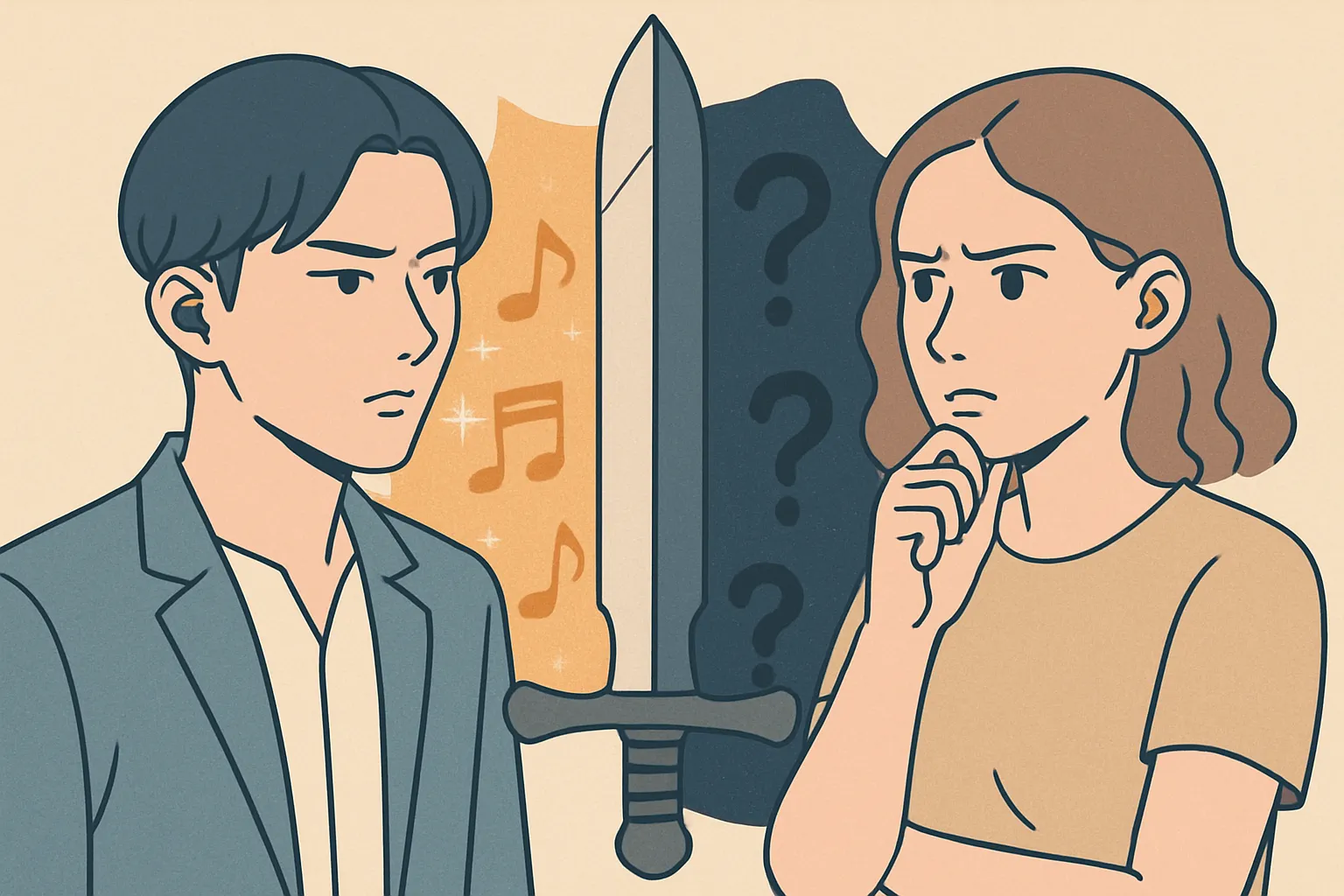

Beyond the Traditional: Debating Korea’s Civil Partnership Act
Hello! Welcome back to Maeil Hangeul, your guide to upgrading your Korean skills to the highest level!
Today, we’re diving deep into a topic that is at the very heart of modern Korean social discourse: the debate surrounding the ‘Civil Partnership Act’ (생활동반자법). This isn’t just about learning new words; it’s about understanding the profound demographic and structural shifts reshaping Korean society. As Korea grapples with an aging population, historically low birth rates, and changing values, the very definition of ‘family’ is being challenged. These days in Korea, the conversation about who deserves legal recognition and protection is more prominent than ever, making this a critical topic for anyone wanting to engage in sophisticated discussions about the country.
Ready to explore the language of social change? Let’s begin!
Core Expressions for the Debate
Here are the essential terms you need to understand and participate in this important conversation.
1. 생활동반자법 (Saenghwaldongbanjabeop)
- Pronunciation [Romanization]: Saeng-hwal-dong-ban-ja-beop
- English Meaning: Civil Partnership Act
- Detailed Explanation: This is the name of the proposed legislation. It aims to grant legal status to two consenting adults who live together and provide mutual care and support, regardless of their gender or marital status. It’s designed to create a new legal category separate from marriage (결혼) that offers crucial rights like medical decision-making (의료결정권), inheritance rights (상속권), and social welfare benefits. The core of the debate is whether Korean society is ready to legally recognize relationships beyond the traditional, blood-related, and heterosexual marriage-based family unit.
-
💡 Pronunciation Tip: This is a compound noun: 생활 (life) + 동반자 (companion) + 법 (law). Let’s focus on the final syllable, 법 [beop]. The initial ‘ㅂ’ sound is an unaspirated ‘b’. However, when Koreans say it quickly, the stop sound can be subtle, making it sound softer than the English ‘b’. Practice saying it as a single, flowing word rather than three separate parts to sound more natural.
2. 법적 사각지대 (Beopjeok sagakjidae)
- Pronunciation [Romanization]: Beop-jjeok sa-gak-ji-dae
- English Meaning: Legal blind spot
-
Detailed Explanation: This is a key phrase used by proponents of the bill. ‘사각지대’ literally means a ‘blind spot’ (like in your car’s mirror), and ‘법적’ means ‘legal’. The term refers to people or situations that are not covered or protected by the current legal framework. Advocates argue that long-term cohabiting couples (both opposite-sex and same-sex), or even elderly friends who live together for mutual support, exist in this ‘legal blind spot’. For example, they cannot give medical consent for their partner or inherit property without a will, leaving them extremely vulnerable.
-
💡 Pronunciation Tip: Notice the pronunciation of 법적 is [법쩍 / beopjjeok], not [beopjeok]. When the plain consonant ‘ㅈ’ (j) follows a final consonant like ‘ㅂ’ (p), it becomes a tense sound, ‘ㅉ’ (jj). This is a very common rule called ‘tensing’ (경음화). Applying this rule will make your pronunciation sound much more authentic.
3. 사회적 합의 (Sahoejeok habui)
- Pronunciation [Romanization]: Sa-hoe-jeok ha-bui
- English Meaning: Social consensus
-
Detailed Explanation: This is the primary argument used by opponents of the Civil Partnership Act. They claim that there is not yet a ‘social consensus’ on expanding the definition of family. This phrase implies that a significant societal change, especially one that alters a fundamental institution like family, should only be made after achieving broad public agreement. The term is frequently invoked in Korean political discourse to delay or argue against progressive legislation.
-
💡 Pronunciation Tip: Pay attention to the sound change in 합의 [하비 / habi]. The final consonant ‘ㅂ’ (b) in ‘합’ is followed by the vowel ‘의’ (ui). However, a more critical rule is at play: when a final consonant like ‘ㅂ’ is followed by a syllable starting with a vowel, it often links to that vowel. But here, the ‘ㅎ’ (h) is very weak. The ‘ㅂ’ links and the ‘ㅎ’ sound almost disappears, resulting in a pronunciation that sounds like [하비 / habi]. This assimilation makes the flow much smoother.
4. 다양한 가족 형태 (Dayanghan gajok hyeongtae)
- Pronunciation [Romanization]: Da-yang-han ga-jok hyeong-tae
- English Meaning: Diverse family forms
-
Detailed Explanation: This phrase encapsulates the core philosophy behind the proposed law. It acknowledges the reality that the traditional nuclear family is no longer the only, or even the most common, type of household in Korea. It includes single-person households (1인 가구), single-parent families (한부모 가정), cohabiting couples (동거 커플), and households of elderly friends, among others. The argument is that the law must evolve to embrace and protect these ‘diverse family forms’.
-
💡 Pronunciation Tip: Let’s look at 가족 형태 [가조켱태 / gajokyeongtae]. Here, the final consonant ‘ㄱ’ (k) of ‘가족’ meets the initial consonant ‘ㅎ’ (h) of ‘형태’. When these two sounds meet, they merge to create an aspirated ‘ㅋ’ (kh) sound. This phenomenon is called ‘aspiration’ (거센소리되기). So, instead of saying ‘gajok’ and ‘hyeongtae’ separately, blend them into [가조켱태].
Example Dialogue
Here’s how these terms might appear in a conversation between two friends discussing the news.
A: 뉴스에서 생활동반자법 도입 관련 토론하는 거 봤어? 찬반 논쟁이 정말 치열하더라.
(Nyuseueseo saenghwaldongbanjabeop doip gwallyeon toronhaneun geo bwasseo? Chanban nonjaeng-i jeongmal chiyeolhadeora.)
Did you see the debate on the news about introducing the Civil Partnership Act? The arguments for and against are really intense.
B: 응, 봤어. 현행법으로는 보호받지 못하는 법적 사각지대에 놓인 사람들을 위해 필요하다는 주장이 설득력 있더라.
(Eung, bwasseo. Hyeonhaengbeobeuroneun bohobatji mothaneun beopjeok sagakjidae-e noin saramdeureul wihae piryohadaneun jujang-i seoldeungnyeok itdeora.)
Yeah, I did. The argument that it’s necessary for people left in a legal blind spot, unprotected by current laws, is quite persuasive.
A: 맞아. 하지만 아직 사회적 합의가 부족하다는 반대 의견도 만만치 않아. 전통적인 가족관을 중시하는 목소리가 크니까.
(Maja. Hajiman ajik sahoejeok habui-ga bujokadaneun bandae uigyeondo manmanchi ana. Jeontongjeogin gajokgwaneul jungsi-haneun moksoriga keunikka.)
True. But the opposition, which says there isn’t enough social consensus yet, is also formidable. The voices emphasizing traditional family values are loud.
B: 결국 우리 사회가 다양한 가족 형태를 어디까지 제도적으로 인정할 것인가의 문제인 것 같아. 정말 중요한 변화의 기로에 서 있는 거지.
(Gyeolguk uri sahoega dayanghan gajok hyeongtae-reul eodikkaji jedojeogeuro injeonghal geosin-ga-ui munj-in geot gata. Jeongmal jung-yohan byeonhwa-ui giro-e seo inneun geoji.)
Ultimately, it seems to be a question of how far our society is willing to institutionally recognize diverse family forms. We’re really at a crucial turning point for change.
Cultural Tip & Trend Deep Dive
This debate is not happening in a vacuum. It is a direct response to one of Korea’s most significant demographic shifts: the explosion of single-person households (1인 가구). For years, this has been the fastest-growing and now the most common type of household in the country, surpassing the traditional four-person family.
This reality is increasingly reflected in Korean media. K-dramas like “My Mister” (나의 아저씨) or films like “House of Hummingbird” (벌새) subtly explore non-traditional bonds and chosen families that provide emotional and social support outside of blood ties.
Crucially, understanding the 생활동반자법 debate requires looking beyond just LGBTQ+ rights, although that is a vital component. It’s also about elderly citizens who, after their spouses pass away, choose to live with friends to combat loneliness and provide mutual care. In a rapidly aging society, this is a practical and growing phenomenon. The Act aims to provide these partnerships with legal security, making this a complex issue that intersects with aging, loneliness, and the very structure of the social safety net.
Let’s Review and Practice!
Today we learned four key expressions to discuss the complex but important debate on the Civil Partnership Act in Korea:
- 생활동반자법 (Saenghwaldongbanjabeop): Civil Partnership Act
- 법적 사각지대 (Beopjeok sagakjidae): Legal blind spot
- 사회적 합의 (Sahoejeok habui): Social consensus
- 다양한 가족 형태 (Dayanghan gajok hyeongtae): Diverse family forms
Now, let’s put your knowledge to the test!
Practice Question:
Fill in the blanks with the appropriate expressions from today’s lesson.
“찬성 측은 현재의 가족 중심 법 제도가 포용하지 못하는 (1)______________가 많아 이들이 (2)______________에 놓여있다고 주장한다. 반면, 반대 측은 이와 같은 중요한 법안은 충분한 (3)______________를 거친 후에 도입해야 한다고 맞서고 있다.”
(Proponents argue that because there are many (1)______________ that the current family-centric legal system does not embrace, these people are left in a (2)______________. On the other hand, opponents contend that such an important bill must be introduced after achieving sufficient (3)______________.)
What do you think about this issue? Share your thoughts on the debate using the vocabulary you learned today in the comments below