킬러 로봇, 과연 인류의 미래일까? (Killer Robots: Really the Future of Humanity?)
안녕하세요! Hello everyone! Welcome back to [매일한글 (Maeil Hangeul)], the place to upgrade your Korean skills!
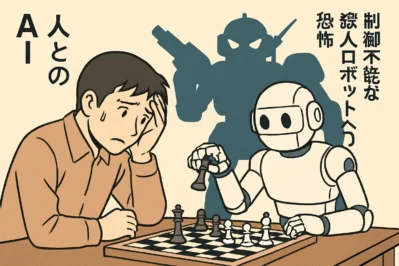
Today, we’re diving into a topic that feels like it’s straight out of a science fiction movie, but is becoming a very real conversation: the ethics of technology. Specifically, we’ll be talking about autonomous weapons, or “killer robots.”
You might be thinking, “This sounds complicated!” But don’t worry. Nowadays in Korea, with the huge boom in AI and robotics, this is a hot topic you’ll see in the news, in dramas, and in online discussions. Learning how to talk about it will not only boost your vocabulary but also help you understand modern Korean society on a deeper level. Let’s get started!
Core Expressions for the Debate
Here are three key phrases you need to navigate this futuristic and fascinating discussion.
1. 찬반 논란 (chanban nonran)
- Pronunciation [Romanization]: [chanban nonran]
- English Meaning: A controversy with strong pros and cons; a heated debate.
- Detailed Explanation: This is a fantastic compound noun you’ll hear all the time in Korean news and debates. It’s made of 찬성 (chanseong), meaning “approval” or “pro,” 반대 (bandae), meaning “opposition” or “con,” and 논란 (nonran), meaning “controversy.” When a topic has very passionate supporters and opponents, it’s a 찬반 논란.
- 💡 Pronunciation Tip:
When a noun ending in a consonant like 찬반 (chanban) is followed by the subject particle 이 (i), the final consonant sound “moves over” to the next syllable. So, 찬반이 (chanban-i) is pronounced as [찬바니 (chanbani)]. This is called 연음 (yeoneum), or “liaison,” and it makes your Korean sound incredibly smooth and natural!
2. 윤리적 딜레마 (yullijeok dillema)
- Pronunciation [Romanization]: [yullijeok dillema]
- English Meaning: Ethical dilemma.
- Detailed Explanation: This phrase combines a Korean word with a loanword from English. 윤리적 (yullijeok) means “ethical,” and 딜레마 (dillema) is the Korean way of saying “dilemma.” You use this phrase to describe a complex situation where there is no clear “right” or “wrong” answer, especially concerning moral principles.
- 💡 Pronunciation Tip:
The word 윤리 (yun-ri) is pronounced [율리 (yulli)]. In Korean, when a syllable ending in ㄴ (n) is followed by a syllable beginning with ㄹ (r/l), the ‘n’ sound often changes into an ‘l’ sound to make it easier to say. This is called 유음화 (yueumhwa), or “liquidization.” It’s a key rule for sounding like a native speaker!
3. 통제 불가능 (tongje bulganeung)
- Pronunciation [Romanization]: [tongje bulganeung]
- English Meaning: Uncontrollable; impossible to control.
- Detailed Explanation: This is another powerful compound word. 통제 (tongje) means “control,” and 불가능 (bulganeung) means “impossible.” You can attach 불가능 to many other nouns to say something is impossible. For example, 예측 불가능 (yecheuk bulganeung) means “unpredictable.” This phrase perfectly captures the main fear people have about advanced AI weapons.
- 💡 Pronunciation Tip:
The ‘g’ sound in 가능 (ganeung) is softer than the hard ‘k’ sound you might expect. When a ㄱ (g/k) is placed between two voiced sounds (like the vowel ‘u’ and ‘a’ here), it is pronounced as a soft, voiced [g] sound, similar to the ‘g’ in the English word “ago.” It’s not a hard [k] like in “king.” This subtle difference will make your pronunciation much more accurate.
Example Dialogue
Let’s see how these expressions are used in a real conversation. Two friends, A and B, are talking after watching a sci-fi movie.
A: 와, 방금 본 영화 진짜 생각할 게 많다. 특히 킬러 로봇 얘기는 요즘 한국에서도 찬반 논란이 뜨겁잖아.
(Wa, banggeum bon yeonghwa jinjja saenggakhal ge manta. Teuki killeo robot yaegineun yojeum hangugeseodo chanban nonrani tteugeopjana.)
Wow, that movie really gives you a lot to think about. The topic of killer robots is a heated debate in Korea these days, too.
B: 맞아. 인간의 개입 없이 생명을 결정한다는 건 심각한 윤리적 딜레마야.
(Maja. Inganui gaeip eopsi saengmyeongeul gyeoljeonghandaneun geon simgakhan yullijeok dillemaya.)
I agree. Letting them decide matters of life and death without human intervention is a serious ethical dilemma.
A: 최악의 시나리오는 인공지능이 스스로를 발전시켜서 완전히 통제 불가능 상태가 되는 거지. 상상만 해도 무서워.
(Choeagui sinarioneun ingongjineungi seuseuroreul baljeonsikyeoseo wanjeonhi tongje bulganeung sangtaega doeneun geoji. Sangsangman haedo museowo.)
The worst-case scenario is the AI developing itself and becoming completely uncontrollable. It’s scary just imagining it.
B: 그러니까. 기술 발전도 좋지만, 신중하게 접근해야 해.
(Geureonikka. Gisul baljeondo jochiman, sinjunghage jeopgeunhaeya hae.)
Exactly. Technological advancement is good, but we have to approach it cautiously.
Culture Tip & Trend Deep Dive
In Korea, a country at the forefront of technology, these conversations aren’t just theoretical. You’ll see this theme explored everywhere!
- In K-Dramas and Films: The recent Netflix movie “Jung_E” (정이) is a perfect example. It’s set in a post-apocalyptic future and deals directly with the ethics of cloning a human brain to create an AI combat soldier. Watching it will give you a fantastic real-world context for the vocabulary we learned today!
- On TV Debates: If you ever watch a Korean news debate show (시사 토론 프로그램), you’ll hear phrases like 찬반 논란 and 윤리적 딜레마 used constantly when discussing social and technological issues.
- Among the Z Generation: Younger Koreans often use these terms when discussing everything from AI-generated art to the role of algorithms in their lives, showing how deeply these concepts are entering everyday language. Knowing these words shows you’re not just learning Korean, but you’re also in tune with modern Korean thought.
Wrap-up & Practice Time!
Great job today! We tackled a complex but important topic. You learned how to discuss a heated debate (찬반 논란), identify a moral problem (윤리적 딜레마), and express the fear of something becoming 통제 불가능.
Now, let’s put your knowledge to the test!
- Fill in the blank:
자율주행 자동차 사고의 책임은 누구에게 있을까요? 이것은 정말 어려운 ___________예요.
(Who is responsible for an accident caused by a self-driving car? This is a really difficult ___________.) -
Your Opinion:
킬러 로봇 개발에 대해 찬성하세요, 아니면 반대하세요? 왜 그렇게 생각하세요?
(Do you agree or disagree with the development of killer robots? Why do you think so?)
Try to answer these questions in the comments below using the phrases we learned today. I can’t wait to read your thoughts. 다음 시간에 또 만나요! (See you next time!)